
GSM to oz Converter and Fiberglass Fabric Weight Chart
Free GSM to oz/yd² converter. 1 oz/yd² = 33.906 g/m², so 200 gsm = 5.9 oz, 6 oz ≈ 203 gsm and 400 gsm = 11.8 oz. Plus what fabric weight does and does not specify in an RFQ.
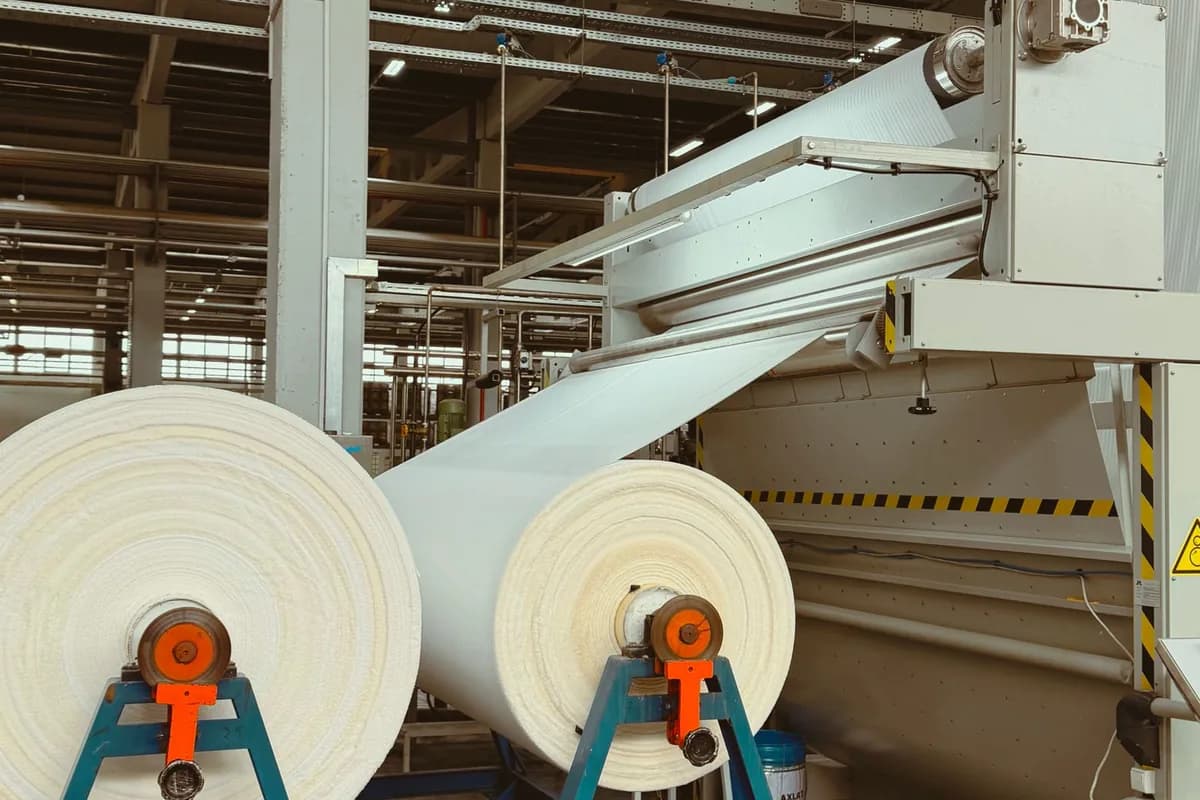
Fabric weight is the mass of reinforcement per unit of area. It is written as grams per square meter (GSM, or g/m²) in metric specifications and as ounces per square yard (oz/yd²) in US specifications. The two describe the same property in different units.
Weight is one of the most quoted numbers in a fiberglass purchase, and also one of the most over-interpreted. It fixes areal mass. It does not, by itself, define weave, fiber type, thickness, strength, or finish. This guide shows how to convert between units and how to keep weight in its correct place inside a complete specification.
Quick Conversion Reference
GSM to oz/yd² converter
1 oz/yd² = 33.906 g/m². Results are rounded; confirm nominal weight and tolerance on the data sheet.
The exact relationship is 1 oz/yd² = 33.906 g/m² (and 1 g/m² = 0.0295 oz/yd²).
| oz/yd² | GSM (g/m²) | GSM | oz/yd² |
|---|---|---|---|
| 2 | 67.8 | 100 | 2.95 |
| 4 | 135.6 | 200 | 5.90 |
| 6 | 203.4 | 300 | 8.85 |
| 8 | 271.2 | 400 | 11.80 |
| 10 | 339.1 | 600 | 17.70 |
To convert manually: multiply oz/yd² by 33.906 to get GSM, or multiply GSM by 0.0295 to get oz/yd². Rounded catalog figures (for example "6 oz" cloth listed at 200 g/m²) are approximations, so confirm the nominal value and tolerance on the supplier data sheet rather than relying on a rounded label.
GSM to oz/yd² for common fabric weights
| GSM (g/m²) | oz/yd² |
|---|---|
| 100 | 2.95 |
| 150 | 4.42 |
| 185 | 5.46 |
| 200 | 5.90 |
| 250 | 7.37 |
| 300 | 8.85 |
| 380 | 11.21 |
| 400 | 11.80 |
| 450 | 13.27 |
| 600 | 17.70 |
| 800 | 23.59 |
oz/yd² to GSM for common fabric weights
| oz/yd² | GSM (g/m²) |
|---|---|
| 1 | 33.9 |
| 1.5 | 50.9 |
| 3 | 101.7 |
| 5 | 169.5 |
| 6 | 203.4 |
| 7.5 | 254.3 |
| 8 | 271.2 |
| 9 | 305.2 |
| 10 | 339.1 |
| 12 | 406.9 |
| 18 | 610.3 |
When a fabric is described as "8.85 oz", that almost always means 8.85 oz/yd², which is 300 g/m². It is not a total weight of 8.85 ounces (about 251 grams).
What Does Areal Weight Mean?
Areal weight, also called fabric weight, basis weight, or mass per unit area, is how much one square unit of the dry fabric weighs: grams per square meter (GSM) or ounces per square yard (oz/yd²). A 200 g/m² fiberglass cloth means one square meter of that cloth weighs 200 grams (about 0.44 lb). It describes how much glass is in the fabric, not how thick, strong, or tightly woven it is.
Why the Two Units Coexist
Metric datasheets, ISO-aligned technical drawings, and most non-US suppliers use GSM. US marine, repair, and hobby channels often use oz/yd². A global RFQ frequently mixes both, so a buyer comparing a "300 GSM" biaxial from one mill against a "6 oz" cloth from another is comparing roughly the same areal mass — but only after conversion, and only on weight.
Areal weight (mass per unit area) is also different from linear or "yield" measures such as ounces per linear yard, which depend on roll width. When a figure is given, confirm it is per unit area, not per linear length.
What Fabric Weight Does Specify
- Areal mass: the amount of glass per square meter, which drives how many plies reach a target laminate thickness and fiber content.
- A comparison anchor: within the same construction and fiber, a heavier fabric generally builds thickness faster per ply.
- Handling scale: very light tissues and very heavy woven rovings behave differently in cutting, wet-out, and drape.
What Fabric Weight Does Not Specify
Weave and construction
A 200 GSM plain weave, a 200 GSM twill, and a 200 GSM unidirectional can share the same weight and behave very differently. State the construction separately. See the unidirectional vs woven fiberglass guide when the construction is still open.
Thickness
Dry-fabric weight does not fix cured laminate thickness. Thickness depends on fiber volume fraction, compaction, resin, process, and measurement method. Do not convert a GSM value directly into a ply thickness.
Fiber type and grade
E-glass, ECR-glass, S-glass, and basalt can be produced at the same areal weight with different properties. Weight is not a fiber identifier. For a cross-material comparison, see basalt fiber vs fiberglass.
Strength and stiffness
Two fabrics at equal weight can differ in mechanical performance because of fiber, weave, and how the reinforcement is oriented relative to the load. Weight is an input to a laminate, not a performance rating.
How Weight Fits a Complete Specification
Treat weight as one field among several. A comparable RFQ line reads more like this:
| Field | Example | Why it matters |
|---|---|---|
| Fiber type / grade | E-glass, ECR, S-glass, basalt | Weight alone is not a fiber |
| Construction | plain, twill, woven roving, UD, biaxial | Same weight, different behavior |
| Nominal areal weight | 300 g/m² (8.85 oz/yd²) | State both units to avoid mix-ups |
| Weight tolerance | ±5% or project value | Controls lot-to-lot consistency |
| Usable width | mm and inches | Cutting plan and yield |
| Sizing / resin basis | epoxy, vinyl ester, polyester | Wet-out and adhesion |
| Test / documentation | data sheet, CoA | Objective acceptance |
When both units and a tolerance appear on the line, two suppliers can be compared on the same basis. A rounded label with no tolerance cannot be audited against a delivery.
Measuring and Verifying Weight
Areal weight is verified by cutting a known area, conditioning it, and weighing it. ASTM D3776, *Standard Test Methods for Mass Per Unit Area (Weight) of Fabric*, is the widely referenced textile method; suppliers may also cite an equivalent ISO or in-house method. For acceptance, agree on:
- The test method and specimen area.
- The nominal value and tolerance.
- Whether conditioning (moisture, sizing loss on ignition) is included.
A single coupon weight is a spot check, not a roll-level guarantee. For structural work, confirm how the supplier reports and controls weight across a lot.
Common Conversion Mistakes
- Rounding as if exact: "6 oz = 200 GSM" is convenient but rounded; the exact value is 203.4 g/m².
- Mixing area and length: oz/yd² (area) is not oz per linear yard (depends on width).
- Treating weight as thickness: cured thickness is a laminate result, not a fabric constant.
- Assuming weight ranks strength: orientation and construction can outweigh raw mass.
Tissue Mats and Rotor Paper Use the Same Units
Thin wet-laid materials are also bought by areal weight, usually far below woven fabrics. Our fiberglass tissue mats and veils are normally quoted in g/m², and desiccant rotor forming paper is specified by basis weight together with thickness and roll width. The converter above works the same way for these grades; basis weight and tolerance are confirmed for each project.
Next Step
Once weight, construction, fiber, width, and tolerance are defined, move the line into the composite reinforcement RFQ checklist and review the full field list in the carbon fiber fabric specification guide. ZeYuSen Fiber's woven roving and plain-weave cloth pages list the constructions the weights above typically describe. Send the requirements with both units stated for a comparable quotation.
Source and Evidence Boundary
- Unit conversion is exact arithmetic: 1 oz/yd² = 33.906 g/m² (1 oz = 28.3495 g; 1 yd² = 0.83613 m²).
- Test method reference: ASTM D3776, *Standard Test Methods for Mass Per Unit Area (Weight) of Fabric*, checked 2026-07-16.
- Product availability statements are limited to the current ZeYuSen Fiber catalog.
- This guide does not claim that a given weight guarantees strength, thickness, processing behavior, or search results.
Related Guides
Frequently Asked Questions
Multiply the oz/yd² value by 33.906. For example, 6 oz/yd² × 33.906 = 203.4 g/m². To go the other way, multiply GSM by 0.0295: 300 g/m² × 0.0295 = 8.85 oz/yd². Catalog labels are often rounded, so use the supplier's nominal figure and tolerance for a real specification.
Not by itself. A higher areal weight builds thickness faster per ply, but laminate strength and stiffness depend on fiber type, weave or stitch construction, fiber orientation relative to the load, fiber volume fraction, and the resin system. Two fabrics of equal weight can perform very differently, so weight should be specified alongside those fields rather than treated as a performance rating.
It depends on the grade, which is why fiberglass fabric is sold by areal weight. Light surfacing tissues and veils weigh well under 100 g/m², general-purpose woven cloth is commonly in the 200–600 g/m² range, and heavy woven rovings and multiaxial fabrics go higher. Multiply the areal weight by the area you need: 10 m² of a 300 g/m² cloth weighs about 3 kg of dry glass, before resin.
Not reliably. Thickness depends on fiber type, weave or stitch construction, compaction, and how it is measured, so two fabrics of the same thickness can have different areal weights. Use the supplier's stated GSM and tolerance rather than estimating it from a thickness figure.
No. Ounces per square yard is an areal weight (mass per unit area) and is directly convertible to GSM. Ounces per linear yard depends on the roll width, so it is not interchangeable with GSM. Always confirm whether a weight figure is per unit area before converting or comparing it.

Author
ZeYuSen Fiber Technical Team
Focused on fiberglass mats and veils, carbon fiber mats, and desiccant rotor forming paper for industrial material selection and process evaluation.
Need help choosing a material?
Send your application, process, and target specifications. ZeYuSen Fiber can help evaluate carbon fiber mats, fiberglass mats and veils, or desiccant rotor forming paper.
Contact ZeYuSen FiberOn this page
- Quick Conversion Reference
- GSM to oz/yd² for common fabric weights
- oz/yd² to GSM for common fabric weights
- What Does Areal Weight Mean?
- Why the Two Units Coexist
- What Fabric Weight Does Specify
- What Fabric Weight Does Not Specify
- Weave and construction
- Thickness
- Fiber type and grade
- Strength and stiffness
- How Weight Fits a Complete Specification
- Measuring and Verifying Weight
- Common Conversion Mistakes
- Tissue Mats and Rotor Paper Use the Same Units
- Next Step
- Source and Evidence Boundary