
Unidirectional vs Woven Fiberglass: A Selection Guide
Compare unidirectional and woven fiberglass by load direction, handling, laminate design, process, sample testing, and RFQ requirements.
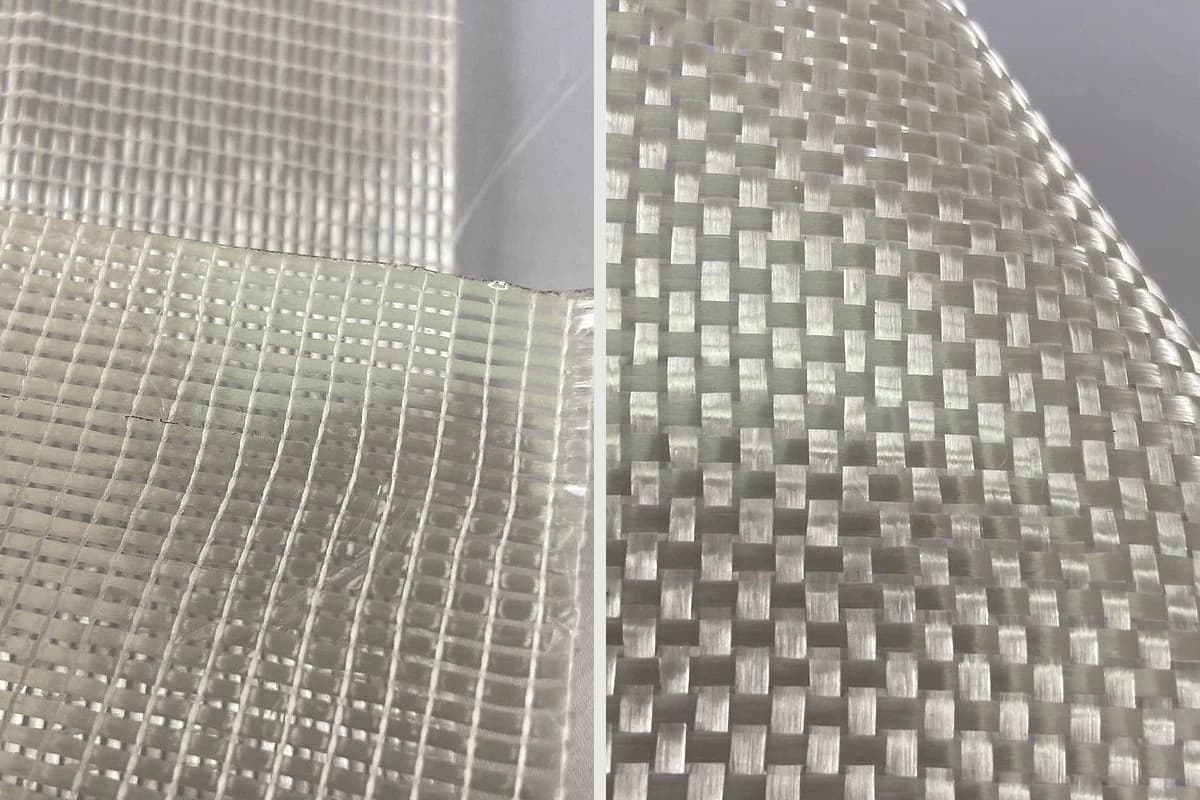
Unidirectional fiberglass and woven fiberglass organize reinforcement in different ways. Unidirectional material concentrates most of its primary fibers along a defined axis. Woven fabric interlaces warp and weft yarns, usually creating reinforcement in two directions while improving textile stability.
Neither form is automatically stronger or better. The useful question is whether the reinforcement architecture matches the part's load paths, geometry, manufacturing process, surface requirements, and validation method.
Quick Decision View
| Project condition | Direction to investigate | What still needs validation |
|---|---|---|
| One dominant load direction is clearly defined | Unidirectional fiberglass | Fiber direction, support yarns, stacking, compression and off-axis behavior |
| Reinforcement is needed in two principal directions | Woven fiberglass or a 0/90 architecture | Warp/weft balance, weave, crimp, GSM, laminate schedule |
| Shear or angled loads dominate | A suitable multiaxial construction | Exact orientations, stitching, resin flow, laminate testing |
| Material must remain stable during cutting and placement | Woven or stabilized UD | Edge behavior, distortion, tack or binder, shop trial |
| Cosmetic surface is important | A selected woven fabric or surface layer | Pattern, print-through, resin, tooling and finish standard |
| The structural requirement is not yet defined | Do not choose from the fabric name | Load case, laminate engineering and test plan |
This table screens options. It does not replace laminate design or part qualification.
What Unidirectional Fiberglass Means
In a unidirectional reinforcement, most load-carrying fibers run in one direction. A light transverse yarn, stitch, binder, or backing may hold the material together, so "UD" does not always mean that every visible fiber is perfectly parallel or that there is no secondary material.
Ask the supplier for:
- primary fiber direction and percentage or construction basis;
- transverse support yarn, stitch, binder, or backing details;
- nominal GSM and width;
- roll orientation and marking;
- sizing and intended resin compatibility;
- handling instructions and splice policy.
The site's current unidirectional fiberglass cloth page lists a 275 g/m2 E-glass construction. Treat that as one catalog product, not a definition of every UD reinforcement.
What Woven Fiberglass Means
Woven fiberglass interlaces yarns. The category includes fine woven cloth, plain and twill constructions, heavier woven roving, and other textile architectures. Those products can differ substantially in yarn size, weave, balance, openness, drape, surface, and areal weight.
Relevant catalog examples include:
- plain-weave fiberglass cloth;
- woven roving;
- multiaxial fiberglass fabric, which is stitched rather than a conventional interlaced weave.
Do not use "woven" as a complete specification. Name the exact construction.
Load Direction Is the First Filter
Fiber reinforcement works through orientation within the laminate. If the part has a known primary load path, UD layers may place material efficiently along that direction. If loads act in more than one direction, the laminate may need cross plies, woven fabric, multiaxial layers, or a combination.
A comparison should therefore include the entire stacking sequence:
| Question | Why it matters |
|---|---|
| Which directions carry tension, compression, shear, or impact? | Determines where reinforcement is needed |
| Is the laminate balanced and appropriate for the geometry? | A single UD direction rarely defines a complete part |
| Which layer provides surface stability or finish? | Structural and cosmetic roles may differ |
| How will cutouts, joints, corners, and load introduction be handled? | Local details can control failure |
| Which tests represent service conditions? | Generic fabric data cannot approve the part |
Engineering responsibility remains with the part designer. A fabric supplier can clarify material construction but cannot infer an unknown load case from a product name.
Handling and Lay-Up Differences
UD material can be sensitive to direction marking, fiber waviness, edge disturbance, and movement during placement. Woven material is often more self-stable because the yarns interlace, but it can still distort, fray, or change angle when handled.
Evaluate both materials on the actual shop process:
- Cut the planned shapes and record edge quality and dimensional stability.
- Place them on representative flat, curved, and corner features.
- Check whether fibers remain at the intended orientation.
- Apply the actual resin and compaction route.
- Inspect for bridging, wrinkles, dry areas, print-through, or other project-defined defects.
The result depends on the fabric, resin, operator method, tooling, and process controls. Avoid turning a single trial into a universal material claim.
Resin Infusion and Wet-Out
Resin flow cannot be predicted from UD versus woven alone. Bundle size, fabric openness, stitching, binder, sizing, stacking, flow media, vacuum quality, resin viscosity, temperature, and part geometry all contribute.
For infusion or RTM, request the supplier's available process guidance and run a representative trial. If a flow route depends on a specific product architecture, freeze that construction in the purchase specification instead of allowing an undefined "equivalent."
Surface and Appearance
Woven fabric may be selected when a visible textile pattern is part of the design. UD can create a more directional surface. Neither guarantees a cosmetic result after cure because resin, compaction, tooling, release system, surface layer, and finishing also affect appearance.
Use an approved panel or retained sample to define cosmetic acceptance. Terms such as "Class A" or "no print-through" need a project-specific standard rather than an unqualified phrase in an email.
Do Not Compare Only GSM
GSM states dry reinforcement mass per unit area. A UD fabric and a woven fabric with the same nominal GSM distribute fibers differently. They can also have different support materials, thickness, openness, and handling.
Compare at least:
- fiber type and grade basis;
- primary and secondary orientations;
- construction, weave, stitch, binder, or backing;
- nominal GSM and tolerance;
- width and roll presentation;
- sizing and intended resin;
- process and compaction route;
- laminate schedule and acceptance tests.
RFQ Fields for a Comparable Quote
Part / application:
Primary load directions and engineering owner:
Requested architecture: UD / woven / multiaxial / open to proposal
Fiber and composition requirement:
Orientation and construction:
Nominal GSM and tolerance:
Usable width and tolerance:
Sizing and resin system:
Manufacturing process:
Roll, core, splice, packaging, and labeling requirements:
Data sheet, CoA, traceability, and inspection documents:
Sample quantity and approval plan:
Order quantity and destination:
Use the composite reinforcement RFQ checklist for the wider commercial and documentation fields.
Common Selection Errors
- Choosing UD because "all the fibers are straight" without defining off-axis loads.
- Choosing woven because it is easier to handle without checking laminate efficiency.
- Comparing one product's tensile data with another product's laminate data.
- Treating 0/90 woven, +/-45 stitched fabric, and woven roving as interchangeable.
- Approving a material from a flat coupon when the part has difficult corners or cutouts.
- Allowing substitutions without defining orientation, construction, GSM, sizing, and validation.
Product and Next-Step Path
Review the unidirectional fiberglass cloth, plain-weave cloth, woven roving, and multiaxial fiberglass pages as separate product formats.
Then send the application and specification. A useful supplier response requires the load-direction assumptions, resin, process, dimensions, quantity, documents, and sample acceptance plan. Final selection should be based on representative laminate and part validation.
Evidence Boundary
- Product examples and listed catalog specifications were checked against the current ZeYuSen Fiber product data on 2026-07-13.
- The guide intentionally avoids generic strength percentages and does not claim that architecture alone determines finished-part performance.
- Search demand, rankings, and conversion effects remain unverified without first-party data.
Related Guides
Frequently Asked Questions
Consider unidirectional fiberglass when the part has one clearly defined dominant load direction and the design team has confirmed that off-axis, compression, and shear conditions are secondary or handled by additional layers. If loads act in multiple directions, or if that load case has not been engineered yet, a woven or multiaxial architecture is usually the safer starting point for investigation rather than a UD layer alone.
No. Woven roving and woven fiberglass cloth are both interlaced constructions, but they are typically different products within the woven category, often differing in yarn size, weight, openness, and surface finish. Ask the supplier to confirm the exact construction name, GSM, and weave rather than assuming "woven" describes a single standardized product.
Yes, mixing UD and woven layers in a single stacking sequence is a common laminate design approach, since each layer type can serve a different structural or cosmetic role. The specific combination, stacking order, and orientation need to be defined by the part's laminate engineering and validated through the applicable process trial and testing rather than assumed from either material alone.

Author
ZeYuSen Fiber Technical Team
Focused on fiberglass mats and veils, carbon fiber mats, and desiccant rotor forming paper for industrial material selection and process evaluation.
Need help choosing a material?
Send your application, process, and target specifications. ZeYuSen Fiber can help evaluate carbon fiber mats, fiberglass mats and veils, or desiccant rotor forming paper.
Contact ZeYuSen FiberOn this page
- Quick Decision View
- What Unidirectional Fiberglass Means
- What Woven Fiberglass Means
- Load Direction Is the First Filter
- Handling and Lay-Up Differences
- Resin Infusion and Wet-Out
- Surface and Appearance
- Do Not Compare Only GSM
- RFQ Fields for a Comparable Quote
- Common Selection Errors
- Product and Next-Step Path
- Evidence Boundary