
Black Fiberglass Tissue for Acoustic Panels: Facing Approval Guide
Specify black glass tissue as an acoustic panel facing, then connect the appearance sample, bonded construction and acoustic report before approving a material change.
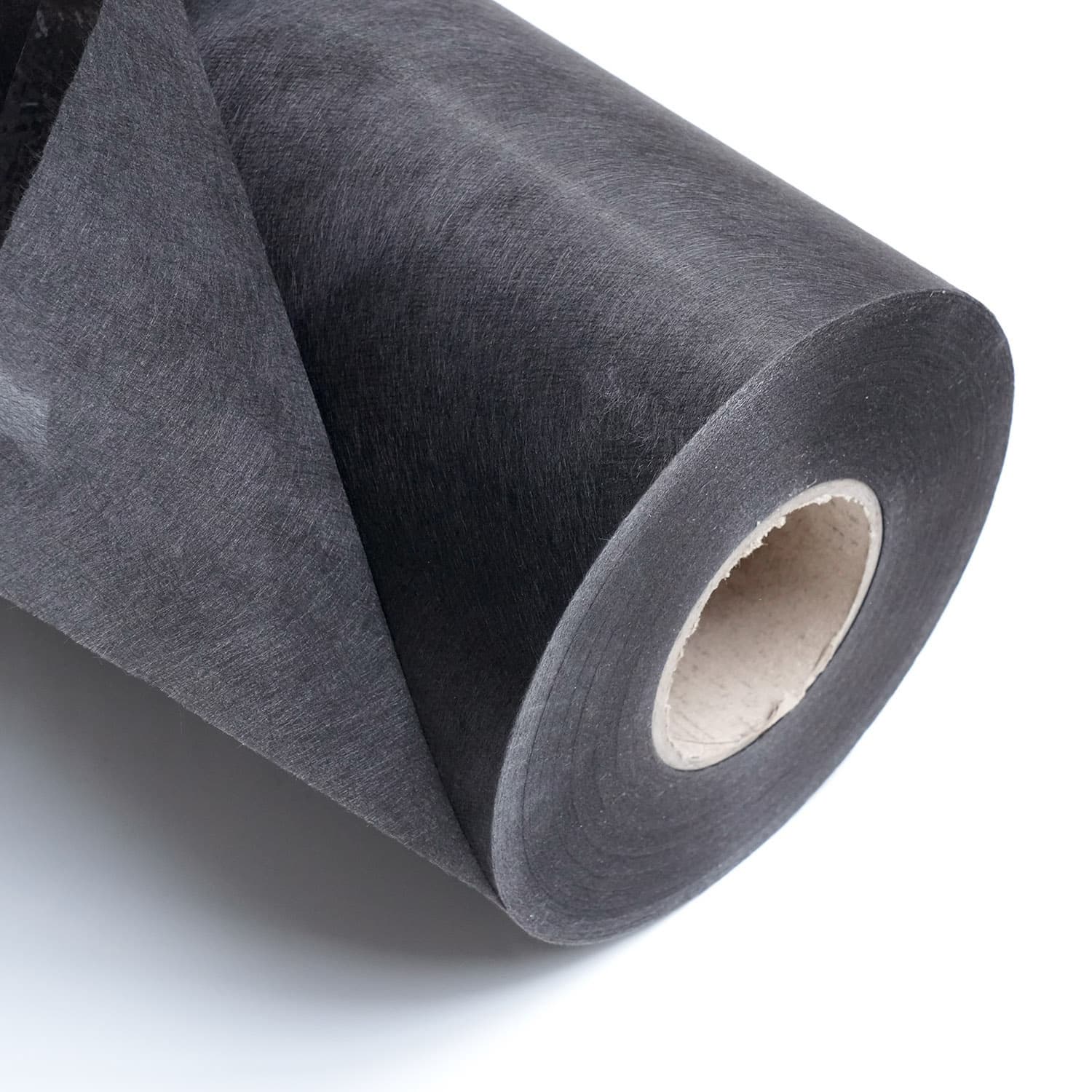
A black tissue swatch can help a buyer choose a surface. It cannot, by itself, approve the acoustic performance of the panel that will carry it. The facing, bond, core and installation need a shared construction reference so that purchasing does not order one version while the test report describes another.
This guide is for manufacturers evaluating black fiberglass tissue facing, not buyers looking for a finished sound-absorbing board. The approval tables below are suggested project records, not a test standard or a report of tests performed by Zeyusen.
Identify the facing separately from the core
For a commercial example, Johns Manville's Whispertone Black distinguishes its fiberglass core board from the black mat facing.
When discussing your construction, identify which material provides the core and where the tissue sits: directly visible, beneath a decorative covering, or behind a perforated or slatted face. A black surface does not make those arrangements equivalent.
The same distinction applies to the bond. Siderise's ALS description specifies an open-structured adhesive for its tissue-faced stone wool system. That is a product-specific example, not an adhesive recipe for your panel. Ask the converter to identify the actual adhesive and application pattern instead of approving only the dry tissue.
Write down what the approval covers
Give the proposed panel a construction ID. Use it on the sample label, drawing, comparison photographs and test request.
| Part of the construction | Record before making the sample | Evidence to associate with approval |
|---|---|---|
| Black tissue facing | Product code, lot, specified basis weight, exposed side and surface reference | Identified dry sample and agreed appearance observations |
| Adhesive layer | Product/version, application pattern, applied amount and curing route used by the converter | Converting record and bonded sample |
| Absorbing core | Material, product code, thickness and other specified core properties | Core identification matching the sample and report |
| Decorative face and rear cavity, if present | Perforation or slat arrangement, backing, cavity and mounting drawing | Representative construction and recorded test mounting |
| Approval boundary | Permitted construction, intended use and people responsible for review | Dated decision stating what remains unverified |
These are record fields, not recommended values. The panel designer and quality team should decide which properties, tolerances and tests govern the project.
Compare a baseline panel with the proposed facing
Use an approved production construction as the baseline when one exists. Make the candidate with the proposed tissue while keeping the other agreed variables unchanged. If the adhesive must also change, label it as a combined change; the comparison can no longer isolate the tissue.
For a new construction with no approved baseline, an unfaced core can be a useful diagnostic reference if the project team chooses it. It is not an acceptance limit for the finished panel.
Keep three kinds of evidence separate:
- Dry facing sample: check the selected surface for visible holes, creases, contamination and color variation against the agreed reference. The product photograph above shows appearance only.
- Bonded sample: inspect it after the intended converting process. Record visible glue marks, changes in texture, wrinkles, edge lifting and the appearance through any decorative front. Agree viewing conditions before comparing photographs.
- Representative acoustic construction: identify the facing, adhesive, core and mounting that the test evidence covers. A neat bonded sample does not establish sound absorption.
Record an observation before assigning a cause. For example, a visible stripe after bonding is a reason to inspect the application record, not proof that the tissue or adhesive is defective.
Match the acoustic report to the sample
ASTM E795-23 makes mounting part of the sound-absorption test context. Keep the mounting description with the result.
Ask the responsible acoustic specialist or laboratory to choose the appropriate method and acceptance criteria. Before using a report to approve the candidate, compare its specimen identity with your construction ID: facing, bond, core, decorative front, backing and mounting. Mark any missing or different item for review.
Do not borrow a finished panel's rating for a roll of tissue, or assume a supplier's report covers a different core or installation. Likewise, an acoustic report alone should not be used to claim fire classification, antibacterial performance or another untested property.
Separate the decisions, especially after a change
| Review result | Suggested next action |
|---|---|
| Appearance accepted; relevant acoustic evidence missing | Record appearance acceptance only; leave acoustic approval open |
| Acoustic evidence accepted; bonded appearance outside the agreed reference | Keep the visual issue open and review the proposed process change |
| Both accepted for the identified construction | Submit that construction for approval, with its limits recorded |
| Facing, adhesive, core or installation changes later | Refer the change to the responsible reviewer before carrying approval forward |
A compact decision record can read:
Construction ID: [ ] · Baseline ID: [ ] · Candidate facing and lot: [ ] · Other changes: [ ] · Appearance decision: [ ] · Acoustic report and covered construction: [ ] · Unresolved differences: [ ] · Reviewer, date and approval limits: [ ]
This avoids an ambiguous “sample approved” message that leaves purchasing, the converter and the panel manufacturer with different assumptions.
Questions before ordering
Is black fiberglass tissue itself an acoustic panel?
No. The product discussed here is a thin facing material. Identify the complete board or lining construction separately and assess its performance with the appropriate evidence.
Can two black tissues with the same basis weight share an approval?
Not on that information alone. Confirm the product identity, surface and bonding behavior, then ask whether the existing approval covers the proposed construction. Matching color and weight is not a test result.
Can an FRP surface tissue replace this facing?
Do not assume a direct substitution. FRP surface tissue is evaluated for a resin-containing laminate role; this page concerns a facing in an acoustic construction. The surface tissue selection guide explains the different laminate task.
What should accompany a facing sample request?
Send the intended layer position, core and decorative face, proposed bonding route, appearance reference and required evaluation evidence. Compare the black tissue product information, then contact Zeyusen to discuss a sample for that construction. Confirm the current grade and documents before treating it as production-approved.
Related Guides

Author
ZeYuSen Fiber Technical Team
Focused on fiberglass mats and veils, carbon fiber mats, and desiccant rotor forming paper for industrial material selection and process evaluation.
Need help choosing a material?
Send your application, process, and target specifications. ZeYuSen Fiber can help evaluate carbon fiber mats, fiberglass mats and veils, or desiccant rotor forming paper.
Contact ZeYuSen FiberOn this page
- Identify the facing separately from the core
- Write down what the approval covers
- Compare a baseline panel with the proposed facing
- Match the acoustic report to the sample
- Separate the decisions, especially after a change
- Questions before ordering
- Is black fiberglass tissue itself an acoustic panel?
- Can two black tissues with the same basis weight share an approval?
- Can an FRP surface tissue replace this facing?
- What should accompany a facing sample request?