
Fiberglass Surface Tissue: Selection & Corrosion Barrier Guide
Choose fiberglass surface tissue by laminate role, glass type, areal weight, binder, resin, roll format, and a practical validation plan.
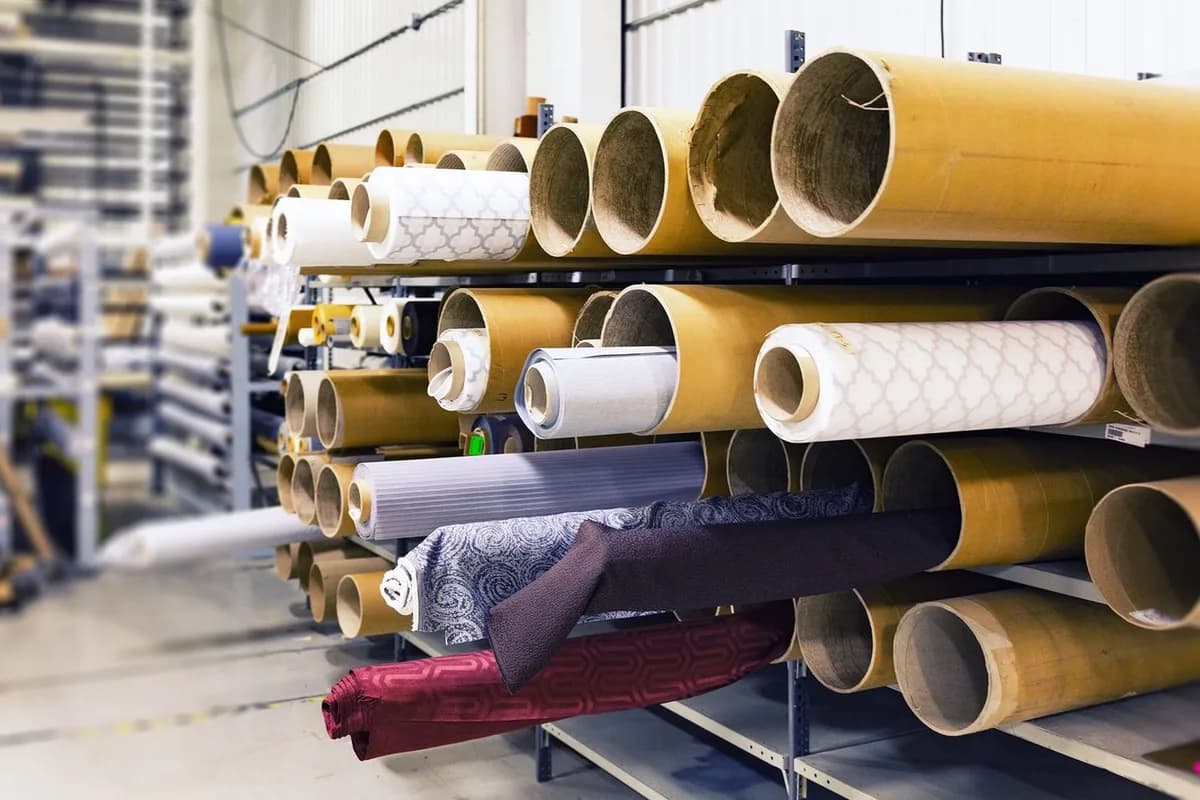
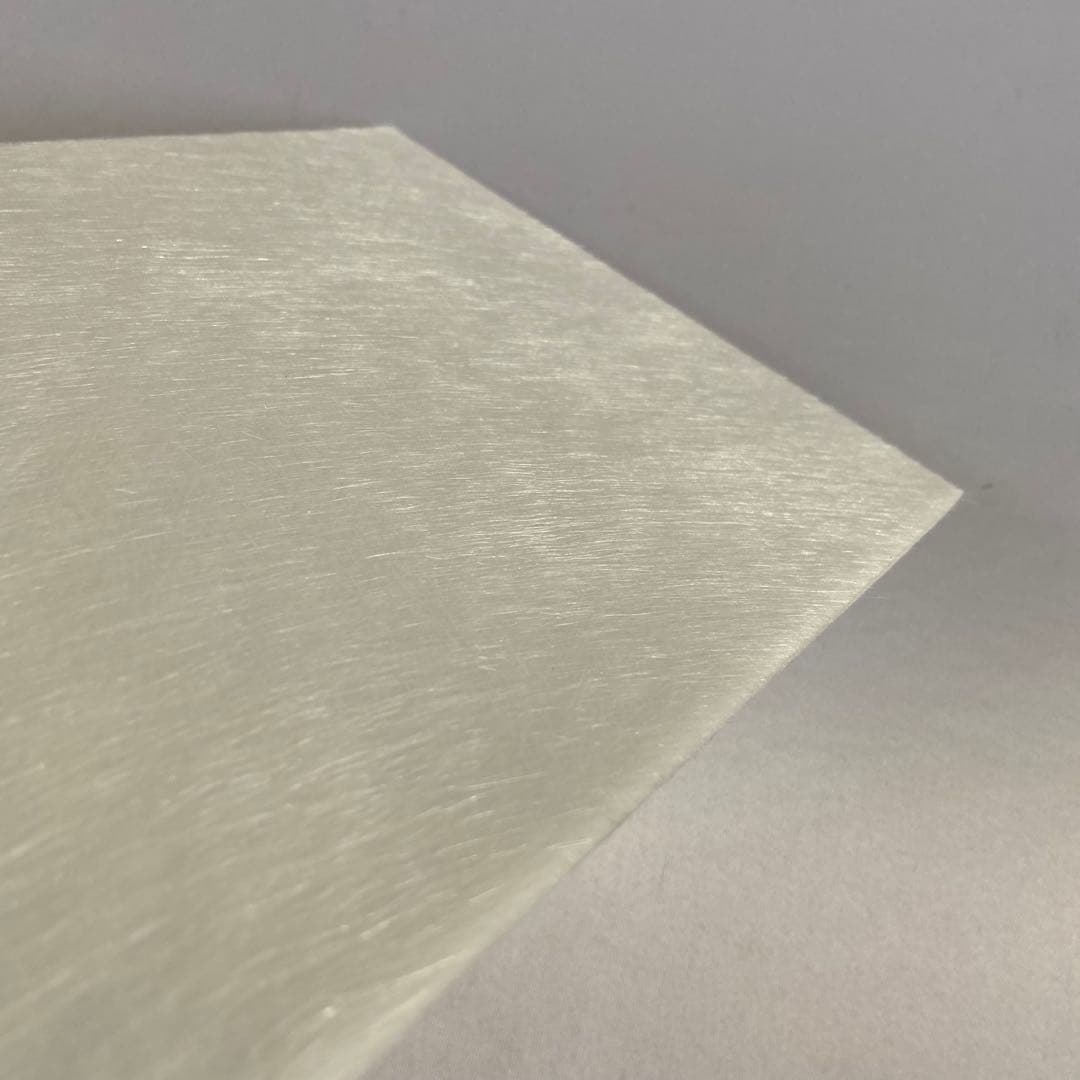
Fiberglass surface tissue—also called fiberglass veil, surface veil, or surfacing mat—is a thin nonwoven layer placed at or near the face of an FRP laminate. It is selected to support a smooth resin-rich surface, reduce print-through from coarser reinforcement, and reinforce a corrosion-barrier liner. It is not normally the main load-carrying layer.
The practical buying rule is simple: specify the tissue by its job in the laminate, glass or fiber type, areal weight, binder or sizing, resin system, process, width, and acceptance test. “Fiberglass tissue” alone is not enough for a comparable quotation.
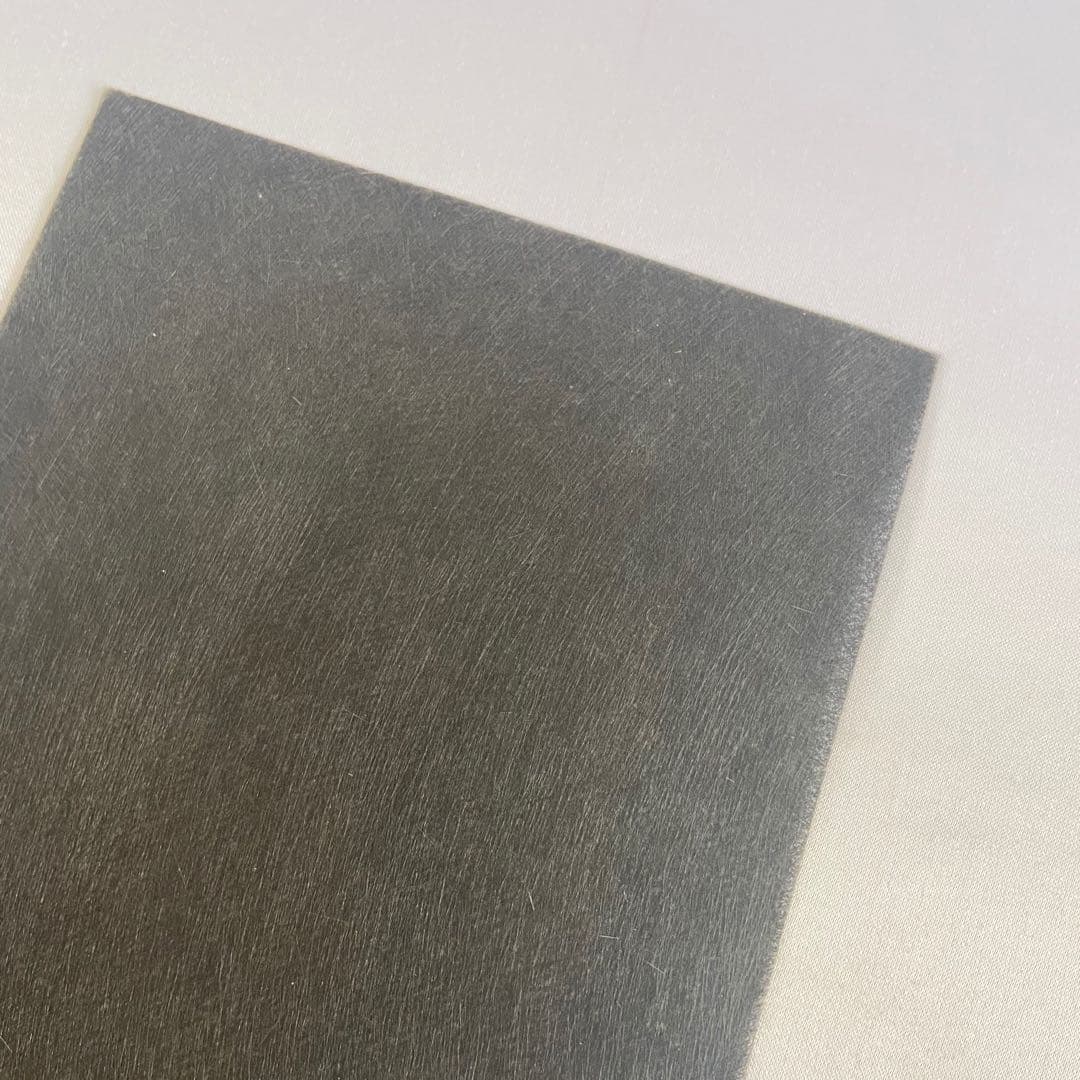
For a black facing behind a perforated acoustic panel, the task differs from creating a resin-rich FRP surface. See black fiberglass tissue for acoustic-panel facings for the distinction between the facing, adhesive and absorber core.
Quick Selection Summary
| Your primary goal | What the tissue must do | What to confirm first |
|---|---|---|
| Cosmetic molded face | Limit coarse fiber print and support a uniform finish | Surface target, mould or gel-coat sequence, wet-out quality |
| Corrosion-side liner | Reinforce and stabilize a resin-rich inner layer | Chemical exposure, temperature, resin selection, veil chemistry |
| Exterior weathering layer | Support a resin-rich outer face | Coating or topcoat, UV system, edge treatment |
| Process carrier or facing | Handle consistently through winding, lay-up, or converting | Binder, tensile handling, roll width, splice and winding quality |
The same tissue should not be assumed suitable for every row. A product that handles well in one resin or process may wet out differently in another.
What Fiberglass Surface Tissue Does
Surface tissue uses fine, dispersed fibers to create a uniform lightweight web. When the web is saturated with resin, it can perform three distinct roles.
1. It separates the visible surface from coarse reinforcement
Woven roving, stitched fabrics, and chopped strand mat can leave their texture at the laminate face. A fine veil creates a transition between those reinforcements and the finish layer, helping the fabric pattern become less visible. Final appearance still depends on mould condition, gel coat, resin shrinkage, cure cycle, consolidation, and laminate design.
2. It reinforces a resin-rich barrier
In corrosion-resistant FRP equipment, the veil can reinforce the resin-rich surface that contacts the service environment and help control that layer. The INEOS Derakane fabrication guide makes an important distinction: chemical resistance comes from the selected resin system, while the veil supports the inner liner and helps prevent coarse fibers from protruding into the exposed surface.
That means a veil does not make an unsuitable resin chemically resistant. Resin selection, cure, thickness, defects, penetrations, and service conditions remain part of the barrier design.
3. It provides a consistent surface web for production
A uniform roll can make placement, winding, or converting more repeatable. The relevant purchasing characteristics include dry handling, fiber distribution, roll build, edge quality, splices, and how quickly and evenly the web wets out in the buyer’s actual resin.
Surface Tissue Is Not Chopped Strand Mat
The words *tissue*, *veil*, and *mat* are sometimes used loosely, so compare the actual construction rather than the label.
| Format | Typical laminate role | Relative construction | What not to assume |
|---|---|---|---|
| Surface tissue / veil | Finish, liner, resin-rich surface | Fine, lightweight nonwoven web | Primary structural capacity |
| Chopped strand mat (CSM) | Skin layer, thickness build, distributed reinforcement | Heavier random chopped strands with binder | Fine cosmetic finish by itself |
| Woven or stitched fabric | Directional structural reinforcement | Organized yarn or roving architecture | Low print-through or easy drape on every shape |
Many laminates use all three: a surface veil at the face, a compatible skin or transition layer behind it, and structural reinforcement farther into the laminate. See the composite laminate layers guide for the full stack and the CSM versus woven roving guide for structural-format differences.
Seven Fields to Specify Before Requesting a Quote
1. Laminate role and exposed side
State whether the veil is for a moulded cosmetic face, a process-side corrosion liner, an exterior weather face, a carrier, or another function. Include which side contacts the mould or service environment and where the veil sits in the ply sequence.
2. Fiber or glass chemistry
Do not use “fiberglass” as the complete chemistry. Corrosion designs may evaluate C-glass, E-CR glass, synthetic, or carbon veils depending on the environment; a general FRP surface product may use a different glass. Ask the designer or resin supplier which veil chemistry belongs in the qualified laminate.
3. Areal weight and construction
Specify nominal g/m² and permitted tolerance, but do not treat areal weight as a complete description. Two tissues at the same weight can differ in fiber distribution, thickness, porosity, binder, tensile handling, and resin demand. The fiberglass fabric weight guide explains what GSM does—and does not—define.
4. Binder, sizing, and resin compatibility
The binder holds the dry web together; sizing and surface treatment influence processing and the fiber–resin interface. Identify the exact resin family and process instead of asking only whether a tissue is “resin compatible.” If the supplier offers PVA- or polyester-bonded versions, request the matching technical data and a wet-out trial for your formulation. The broader sizing and resin compatibility guide provides an RFQ framework.
5. Process and lay-up conditions
State hand lay-up, filament winding, infusion, pultrusion, pressing, or converting as applicable. Include resin viscosity range, working temperature, consolidation method, surface orientation, and whether the tissue must bridge corners or complex geometry. A web that looks acceptable on a flat coupon may wrinkle or separate on a production tool.
6. Roll geometry and packaging
Define usable width, roll length or diameter limit, core inside diameter, edge condition, splice allowance, winding direction, pallet arrangement, and moisture protection. Width should be chosen around the cutting or winding plan, not only the finished part width.
7. Acceptance criteria and documents
Request the current technical data sheet, lot identification, certificate of analysis if required, declared test methods, storage guidance, and sample-retention rules. Translate “smooth surface” into observable criteria such as fiber distribution, holes, creases, contamination, edge damage, splice count, and an approved cured reference panel.
Where the Veil Sits in a Laminate
There is no universal ply sequence, but these simplified examples help communicate intent:
- Moulded cosmetic face: mould / release system → gel coat or surface resin → veil → compatible skin layer → structural plies.
- Process-side corrosion face: service environment → qualified resin-rich liner with veil → corrosion-barrier reinforcement → structural laminate.
- Exterior face: topcoat or qualified resin layer → veil → structural or backing layers.
These are communication diagrams, not engineering prescriptions. The responsible designer must set materials, thicknesses, cure, inspection, and service limits for the actual equipment or part.
A Practical Sample and Validation Plan
Use the same resin batch, reinforcement stack, tooling condition, and cure schedule planned for production. Record the conditions instead of relying on an untraceable hand sample.
- Inspect the dry roll: verify label, lot, width, edges, winding, splices, contamination, and visible web uniformity.
- Run a wet-out check: record wet-out time, trapped air, fiber movement, tearing, wrinkling, and handling through the intended process.
- Make a reference laminate: use the planned gel coat, resin, transition layer, structural reinforcement, and cure.
- Inspect both faces: compare print-through, pinholes, dry areas, wrinkles, exposed coarse fibers, and edge behavior against an approved reference.
- Test the service requirement: use the appropriate chemical-exposure, weathering, coating-adhesion, or process-specific test defined by the responsible engineer.
- Lock the approved construction: record supplier, product code, lot, binder or sizing designation, areal weight, roll format, resin, cure, and acceptance result.
For a corrosion barrier, a cosmetic coupon alone is not sufficient. For a decorative panel, a generic chemical-resistance statement does not prove the required appearance.
RFQ Template for Fiberglass Surface Tissue
Copy this block into an inquiry and replace the brackets:
- Application / part: [tank liner, panel face, pipe, roofing, other]
- Tissue role and position: [surface finish, corrosion liner, exterior face, carrier]
- Fiber / glass type: [required type or supplier recommendation with evidence]
- Areal weight and tolerance: [g/m²]
- Binder / sizing: [known designation or compatibility requirement]
- Resin and process: [resin grade, hand lay-up / winding / infusion / other]
- Service conditions: [chemicals, concentration, temperature, weathering, or cosmetic target]
- Roll and packaging: [width, length or diameter, core, splice limit, packing]
- Quality / documents: [TDS, CoA, lot traceability, sample, declared test methods]
- Quantity and delivery destination: [trial and production demand]
The current ZeYuSen fiberglass surface tissue product page lists several area-weight and binder options. Confirm the exact orderable grade and current technical sheet rather than combining values from different variants.
Common Selection Mistakes
- Choosing by GSM alone without checking binder, glass type, porosity, or roll construction.
- Treating surface tissue as a substitute for structural reinforcement.
- Claiming corrosion resistance from the veil while leaving the resin and cure unspecified.
- Comparing a light veil with a much heavier CSM as if they perform the same laminate role.
- Approving a flat cosmetic coupon when production includes corners, seams, winding tension, or penetrations.
- Omitting splice, edge, core, storage, and lot-document requirements from the purchase specification.
Next Step
Compare available fiberglass tissue and veil products, then send ZeYuSen Fiber your requirements with the RFQ fields above. For a corrosion application, include the chemical environment and resin selection basis; for a cosmetic application, include a surface reference and the full lay-up sequence.
Related Guides
Frequently Asked Questions
It is normally specified for a surface, liner, or processing role rather than primary load carrying. Structural capacity should come from a designed reinforcement stack supported by engineering data.
No. Areal weight changes the web and resin demand, but barrier performance also depends on veil chemistry, resin, thickness, cure, defects, laminate sequence, and service exposure. Validate the complete system.
Do not assume so. Ask for the binder and sizing designation, the supplier’s compatibility statement, and a representative process trial with the exact resin formulation.
Approve the product code and roll specification, required documents, a representative cured panel, objective surface or barrier criteria, and the change-control rule for fiber, binder, sizing, or manufacturing location.

Author
ZeYuSen Fiber Technical Team
Focused on fiberglass mats and veils, carbon fiber mats, and desiccant rotor forming paper for industrial material selection and process evaluation.
Need help choosing a material?
Send your application, process, and target specifications. ZeYuSen Fiber can help evaluate carbon fiber mats, fiberglass mats and veils, or desiccant rotor forming paper.
Contact ZeYuSen FiberOn this page
- Quick Selection Summary
- What Fiberglass Surface Tissue Does
- 1. It separates the visible surface from coarse reinforcement
- 2. It reinforces a resin-rich barrier
- 3. It provides a consistent surface web for production
- Surface Tissue Is Not Chopped Strand Mat
- Seven Fields to Specify Before Requesting a Quote
- 1. Laminate role and exposed side
- 2. Fiber or glass chemistry
- 3. Areal weight and construction
- 4. Binder, sizing, and resin compatibility
- 5. Process and lay-up conditions
- 6. Roll geometry and packaging
- 7. Acceptance criteria and documents
- Where the Veil Sits in a Laminate
- A Practical Sample and Validation Plan
- RFQ Template for Fiberglass Surface Tissue
- Common Selection Mistakes
- Next Step