
Desiccant Rotor Substrate Paper: A Buyer's Specification Guide
Specify glass fiber forming paper for desiccant rotor cores: separate substrate requirements from rotor performance, compare roll specifications, and prepare a useful sample request.
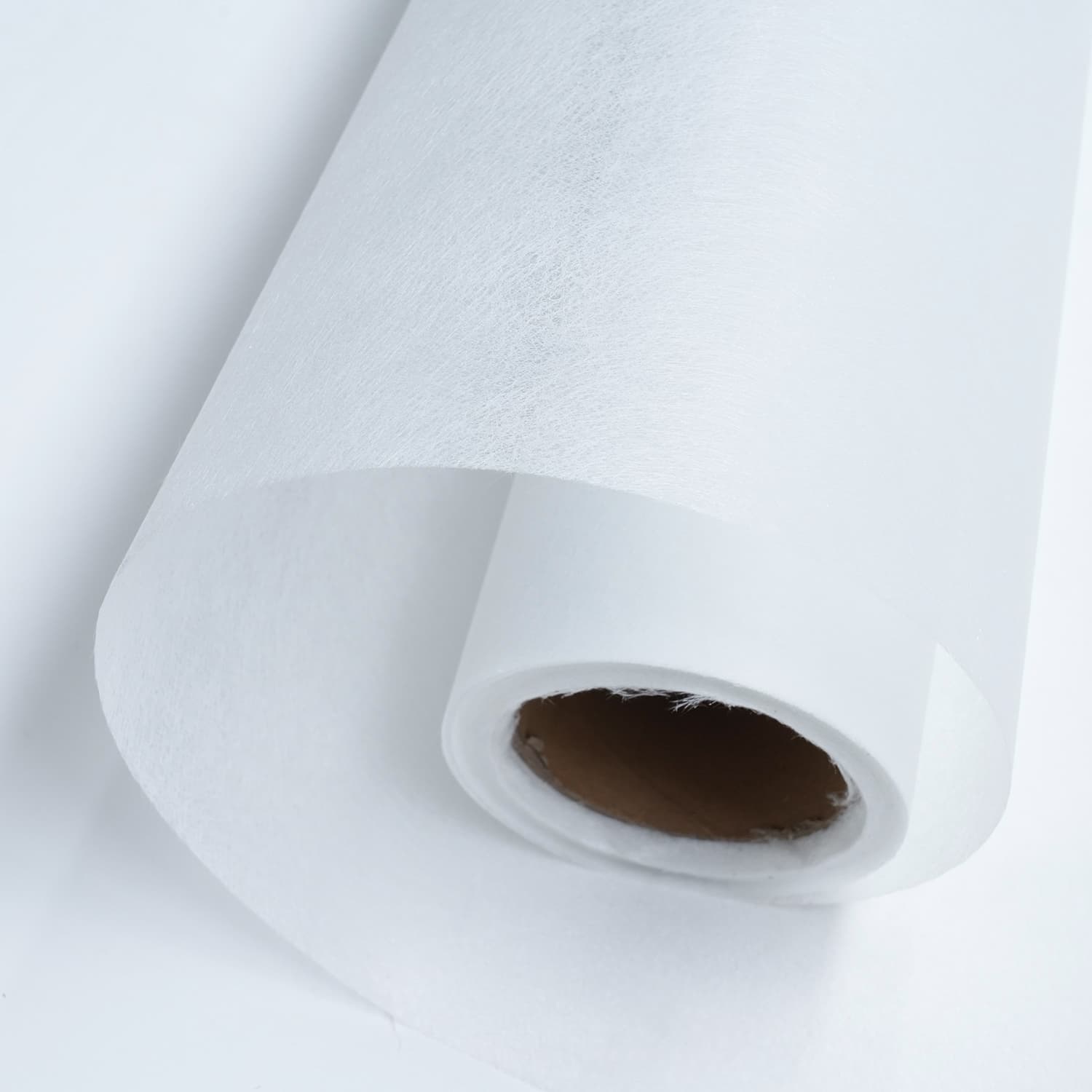
A request for “paper for a desiccant wheel” needs one clarification before a supplier can quote: are you buying the base paper, treated honeycomb media, or a finished rotor? These are different purchasing scopes, with different acceptance evidence.
Zeyusen's desiccant rotor substrate paper is wet-laid glass fiber forming paper supplied as roll material for downstream converting. The grade must be evaluated with the intended corrugating, bonding and impregnation or coating process. A paper specification alone does not establish the finished wheel's moisture-removal performance.
If the enquiry concerns energy recovery rather than a defined dehumidification project, first use the rotor paper versus enthalpy-wheel media guide to clarify the equipment function and purchasing scope.
Separate the three purchasing scopes
| Scope | What the buyer is evaluating | Evidence to request |
|---|---|---|
| Glass fiber substrate paper | The carrier used for flat and corrugated layers | Paper identification, dimensions, binder information and agreed material tests |
| Treated honeycomb media | The formed structure combined with the selected adsorbent system | Processing history, channel geometry and agreed media-level tests |
| Finished desiccant rotor | The assembled wheel under specified operating conditions | Rotor-level performance data, test conditions and mechanical interface details |
For one published construction example, SORPS describes alternating flat and corrugated fiberglass-paper layers. That example explains the material terminology; it does not establish compatibility or performance for Zeyusen paper.
Keep the responsibility split in the request. The paper supplier can confirm what is supplied and which material data are available. The rotor manufacturer defines the converting route and validates the assembled product. Any finished-rotor requirement passed to the paper supplier should be identified as an application target, not a property already demonstrated by the unprocessed roll.
Turn the application into a paper specification
The following is a purchasing worksheet, not a standard specification. Fill in the fields your process already defines and mark the rest for discussion. Ask suppliers to distinguish a typical value from a guaranteed limit and to identify the measurement method.
| Requirement | What to write in the enquiry | What still needs confirmation |
|---|---|---|
| Material and supply stage | Wet-laid glass fiber base paper; whether treatment is included | Exact grade identity and treatment status |
| Basis weight | Target and permitted variation in g/m² | Sampling positions, conditioning and test method |
| Thickness | Target, tolerance and units | Measurement pressure and sample condition |
| Roll format | Width, core dimensions, maximum roll size and winding direction | Equipment fit, splice policy and packaging |
| Handling strength | Where the web is pulled, folded or supported | Machine-direction and cross-direction data under relevant conditions |
| Wet processing | Impregnation or coating system and process sequence | Compatibility with the paper binder and the proposed trial method |
| Forming geometry | Flat or corrugated layer, intended flute geometry | Trial acceptance criteria for shape, cracks and bonding |
| End-use conditions | Rotor application and intended operating envelope | Which requirements must be verified on treated media or the finished rotor |
Two quotations with the same nominal basis weight are not necessarily equivalent. If one gives a typical thickness with no measurement conditions and another gives an agreed acceptance range, the documents answer different questions. Resolve the difference before comparing price.
Do not select the grade from appearance alone
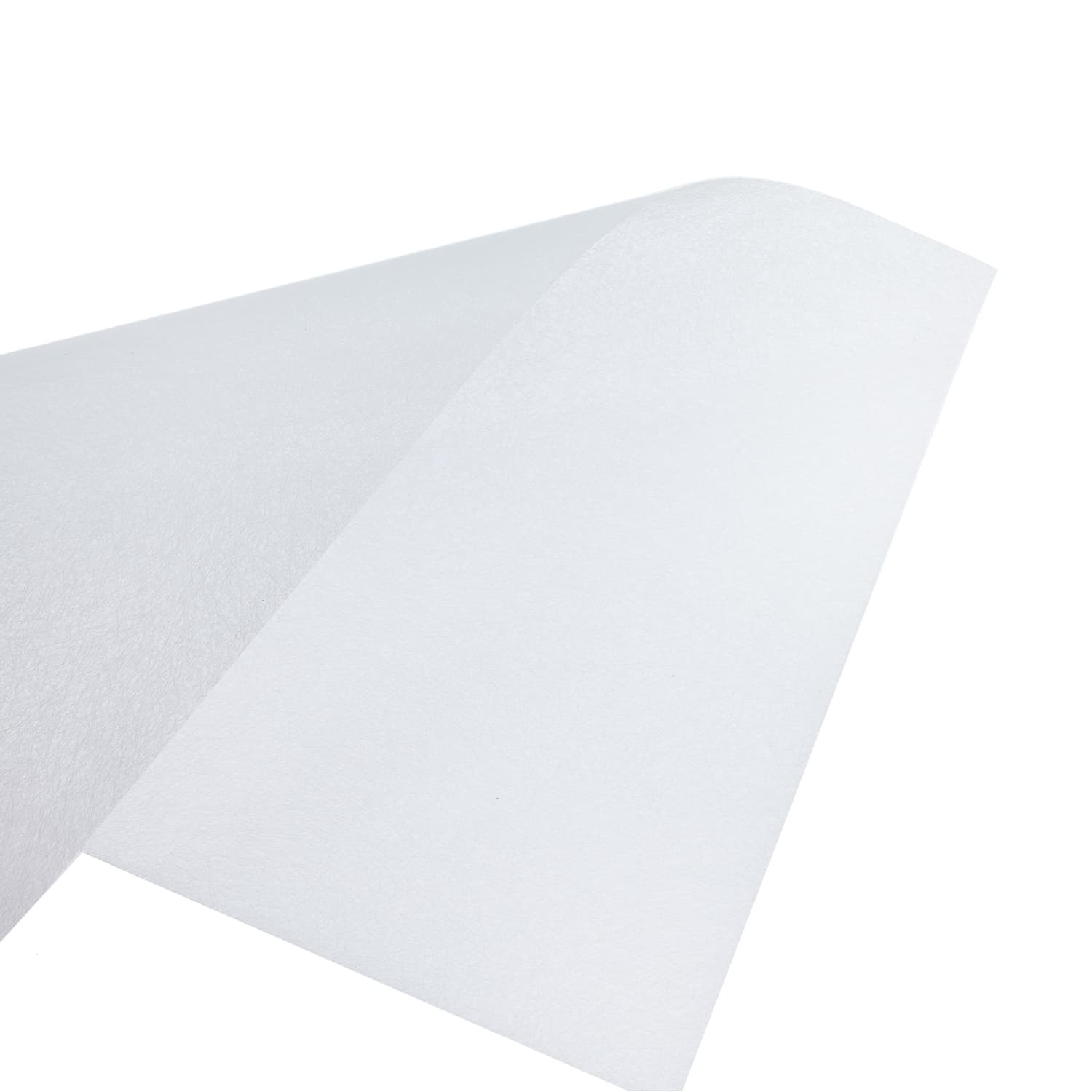
These are product photographs of white paper. They help identify the supplied material form; they do not show its binder chemistry, wet strength, thermal limits or adsorption capacity. Match the sample label and supplier specification to the image, rather than treating colour as a grade identifier.
The same caution applies when comparing fiberglass surface tissue with rotor forming paper. Both appear in the glass fiber mat and tissue range, but their intended tasks differ. A tissue selected for a composite surface should not be substituted into a rotor specification solely because its colour or nominal weight looks similar. Request evidence for the actual converting route.
Describe the process, not just the adsorbent name
“For silica gel” or “for molecular sieve” is useful application context, but it leaves the supplier without the process conditions needed to discuss a grade. Include which operations happen before and after forming, where the paper is wet, and which binder or coating requirements are already fixed. Share formulation details only through an appropriate confidentiality arrangement.
Different routes can put the paper through different sequences. CN117599588A describes a particular corrugated-and-flat-paper honeycomb route. It is a process example, not a universal production recipe or evidence that Zeyusen uses that method.
Before ordering production quantities, agree what will be inspected at each stage of your own route. Use the corrugation and honeycomb trial checklist to separate observations on the base paper from those made after processing.
Make competing quotations comparable
A short comparison record helps purchasing and engineering agree on what is being bought:
| Decision field | Record for each candidate |
|---|---|
| Identity | Supplier, grade code, document revision and sample-roll reference |
| Included in the offer | Paper supply stage, dimensions, quantity, packing and requested documents |
| Confirmed requirements | Each agreed property, unit, method and tolerance |
| Open requirements | Missing information, responsible person and next action |
| Trial decision | Approved for evaluation, awaiting evidence, or unsuitable for the stated trial |
| Production decision | Separate approval reference after the agreed validation is complete |
For example, if both suppliers quote the required roll width but only one confirms the core dimensions, the second offer is still incomplete for equipment-fit review. This is a document-comparison example, not a reported customer result.
Keep sample approval separate from production approval. A sample request should give the supplier enough detail to prepare a useful evaluation roll, while leaving untested requirements clearly open. The broader reinforcement RFQ checklist covers commercial and documentation fields that can accompany this material worksheet.
Common purchasing questions
Is substrate paper already an active desiccant?
Do not assume so. Confirm whether the offer is for base paper, treated media or a finished rotor. Zeyusen's product page describes the glass fiber substrate for downstream processing; it does not quote finished-rotor performance.
Can a heavier paper grade be selected as the safer option?
Weight alone does not establish suitability. Compare it with thickness, handling requirements, forming geometry and the proposed treatment process. The decision should follow agreed sample evidence, not a higher number on the quotation.
Can one approved paper be used for a different adsorbent system?
Record the change and review compatibility with the new process. Approval for one combination of paper, binder, treatment and equipment conditions does not automatically establish suitability for another.
What if the required thickness or binder is not yet known?
Describe the application and process constraints, identify the open fields, and request a starting specification for evaluation. Avoid inserting guessed acceptance limits just to complete the form.
Prepare a focused sample request
Start with the rotor forming paper product details, then send Zeyusen your sample requirements. Include the application, supply stage, target dimensions, roll format, process sequence and proposed acceptance method. This lets the discussion focus on a paper grade your team can actually evaluate.
Related Guides

Author
ZeYuSen Fiber Technical Team
Focused on fiberglass mats and veils, carbon fiber mats, and desiccant rotor forming paper for industrial material selection and process evaluation.
Need help choosing a material?
Send your application, process, and target specifications. ZeYuSen Fiber can help evaluate carbon fiber mats, fiberglass mats and veils, or desiccant rotor forming paper.
Contact ZeYuSen FiberOn this page
- Separate the three purchasing scopes
- Turn the application into a paper specification
- Do not select the grade from appearance alone
- Describe the process, not just the adsorbent name
- Make competing quotations comparable
- Common purchasing questions
- Is substrate paper already an active desiccant?
- Can a heavier paper grade be selected as the safer option?
- Can one approved paper be used for a different adsorbent system?
- What if the required thickness or binder is not yet known?
- Prepare a focused sample request