
3K, 6K, 12K Carbon Fiber Tow Size Guide
What 3K, 6K, and 12K mean for carbon fiber tow and yarn (about 3,000, 6,000, and 12,000 filaments), what they do not specify, and which fields to include in a fabric RFQ.
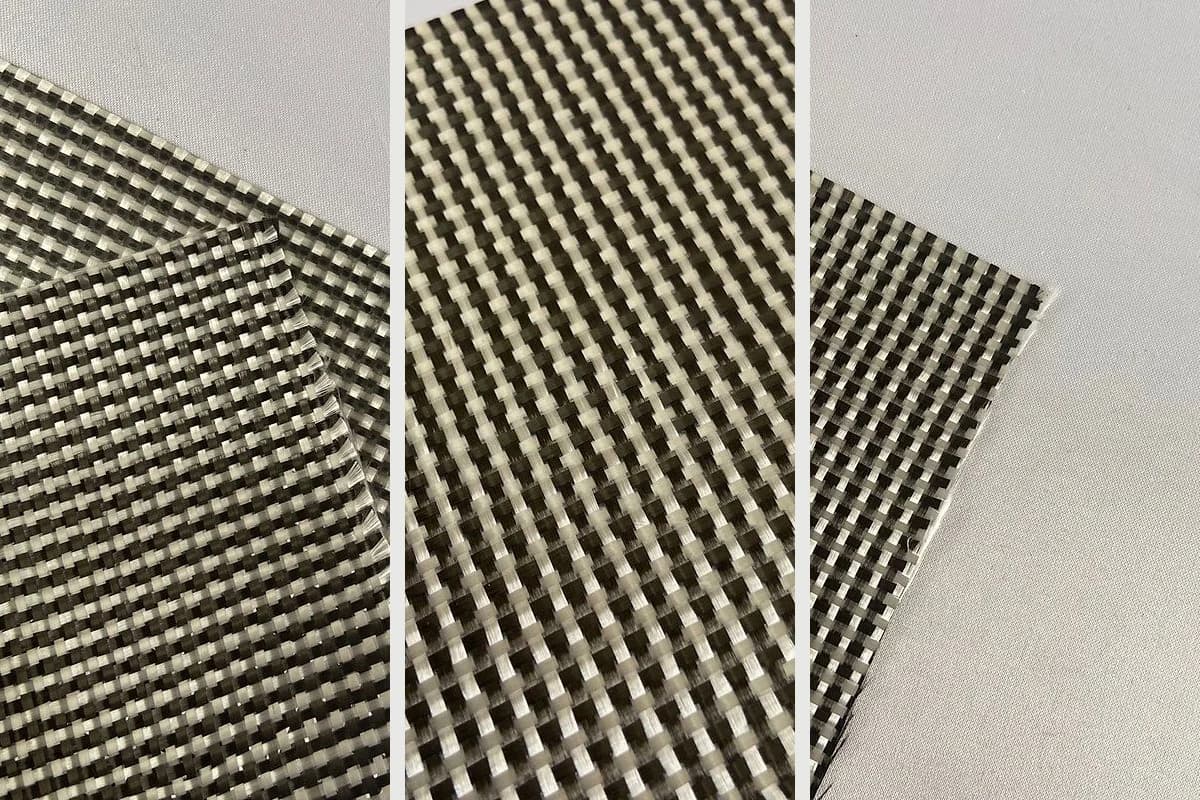
The labels 3K, 6K, and 12K describe the approximate number of filaments grouped into one carbon fiber tow. They do not, by themselves, identify the fiber grade, fabric weight, weave, width, sizing, laminate thickness, or finished-part performance.
That distinction matters in purchasing. A request for "3K carbon fiber cloth" still leaves most of the product definition open. This guide shows how tow size fits into a complete woven-fabric specification and how to compare supplier offers without treating one K-count as universally better.
Quick Reference
| Tow label | Approximate filaments in one tow | Useful as | Not enough to determine |
|---|---|---|---|
| 3K | 3,000 | Yarn bundle size and visual scale | Fiber grade, GSM, weave, width, sizing, laminate properties |
| 6K | 6,000 | Yarn bundle size and fabric construction input | Finished thickness, strength, wet-out, surface quality |
| 12K | 12,000 | Yarn bundle size and production architecture input | Whether the fabric fits a process or part |
The K-count is one field in a specification, not a performance ranking. Two fabrics with the same tow label can differ in nearly every other purchasing-relevant field.
Tow, Filament, Yarn, Warp, and Weft
A filament is one continuous carbon fiber. A tow is a bundle of many filaments supplied together. Textile production uses tows as yarn inputs, placing them in the lengthwise warp direction and crosswise weft direction according to the intended construction.
The carbon fiber manufacturer Toray defines tow as a grouping of filaments packaged on a spool or bobbin and uses K notation when describing filament counts. This terminology supports the basic count definition, but a buyer still needs the fabric supplier's construction and product data.
How Tow Size Changes Fabric Construction
Tow size can influence how a fabric is designed because a larger or smaller bundle changes the textile input available to the weaver. The finished result also depends on yarn spacing, weave pattern, warp and weft counts, tension, spreading, areal weight, and finishing.
For purchasing purposes, examine these consequences instead of relying on the K-count alone:
- Pattern scale: Tow size and yarn spacing together affect how large the visible weave appears.
- Coverage: Fabric openness depends on construction, not only on filament count.
- Areal weight: Different yarn counts and spacings can produce fabrics with similar or different GSM values.
- Handling: Stability, drape, fraying, and distortion depend on the complete textile construction.
- Resin interaction: Sizing, fiber spread, weave, and process conditions all affect impregnation behavior.
Ask for a sample when appearance or handling is important. A photograph and a K-count cannot establish roll-level acceptance.
What 3K, 6K, and 12K Do Not Tell You
Fiber grade
Tow count does not identify tensile grade, modulus, manufacturer, or an approved equivalent. Write the required grade or performance basis separately, and do not assume that every 3K tow uses the same precursor or properties.
Weave pattern
Plain, twill, satin, and other constructions can use different tow inputs. The weave must be stated independently. Use the plain versus twill carbon fabric guide when weave selection is still open.
Fabric weight
GSM is mass per unit area. It is not encoded by the K-count. Require nominal GSM and any acceptance tolerance that your design or quality plan actually controls.
Cured thickness
Dry-fabric thickness and cured laminate thickness are different measurements. Cured thickness depends on the full layup, fiber volume, compaction, resin, process, and measurement method. Do not convert a tow label directly into a ply thickness.
Resin compatibility
The supplier should identify the sizing or compatibility basis for the intended resin system. A matching K-count does not prove compatibility with epoxy, vinyl ester, polyester, phenolic, or another matrix.
Compare Supplier Offers on the Same Basis
Build a comparison table before evaluating price:
| Field | Offer A | Offer B | Buyer decision |
|---|---|---|---|
| Fiber manufacturer and grade | Exact requirement or approved equivalent | ||
| Tow size | 3K, 6K, 12K, or another defined count | ||
| Warp / weft construction | Same tow in both directions or a hybrid construction | ||
| Weave | Plain, twill, satin, or specified alternative | ||
| Nominal GSM and tolerance | Project-controlled range | ||
| Width and tolerance | Usable width for cutting plan | ||
| Sizing / resin basis | Confirm against intended matrix | ||
| Roll length and splice policy | Handling and yield requirement | ||
| Inspection and documents | Data sheet, batch records, CoA, or agreed report | ||
| Sample approval | Retained sample and acceptance criteria |
If a field is blank, the offers may not describe equivalent material. A lower price is not comparable when the product definition differs.
When to Investigate Each Tow Size
Use tow size as a design and sourcing question, not a universal rule:
- Investigate 3K when a finer visible pattern or a specific existing construction is required.
- Investigate 6K when the approved fabric construction or supply chain calls for that yarn input.
- Investigate 12K when a broader tow is part of the target architecture or production route.
- Keep the choice open when the real requirement is GSM, width, processability, surface appearance, or laminate performance rather than a named tow.
The correct choice is the one supported by the fabric construction, supplier data, representative processing, and the part's validation plan.
Sample Approval Should Match the Purchase Specification
A sample review is most useful when it checks the same fields that will control production:
- Confirm the sample label and supplier data match the requested fiber grade and tow size.
- Record weave, GSM, width, surface condition, edge condition, and roll presentation.
- Run the intended cutting, forming, impregnation, and cure process on a representative geometry.
- Evaluate the laminate or part using project-specific acceptance methods.
- Retain the approved sample or objective reference when future lots will be compared against it.
Do not approve only the appearance if structural or process behavior matters. Do not approve only a data sheet if shop handling and surface quality matter.
RFQ Template for Tow-Based Carbon Fabric
Use this compact structure:
Material: dry woven carbon fiber fabric
Fiber grade / approved equivalent:
Tow: 3K / 6K / 12K / other
Warp and weft construction:
Weave:
Nominal GSM and tolerance:
Usable width and tolerance:
Sizing and intended resin:
Process: hand lay-up / infusion / RTM / other
Roll length, core, splice, packaging, and labeling:
Required data sheet, CoA, traceability, or inspection report:
Sample quantity and approval criteria:
Order quantity and delivery destination:
The broader carbon fiber fabric specification guide explains each field. When the specification is ready, move it into the composite reinforcement RFQ checklist.
Product and Validation Path
ZeYuSen Fiber's current catalog includes carbon-glass hybrid woven cloth. A tow size or fiber construction that is not shown on a product page must be confirmed rather than assumed.
For a comparable quotation, send the complete requirements, including the intended resin, process, dimensions, quantity, documentation, and sample plan. Supplier data and representative laminate testing remain necessary before final material approval.
Source and Evidence Boundary
- Terminology reference: Toray Carbon Fiber Terminology, checked 2026-07-13.
- Product availability statements are limited to the current ZeYuSen Fiber catalog.
- This guide does not claim that a K-count guarantees mechanical performance, processing behavior, availability, or search results.
Related Guides
Frequently Asked Questions
No. The K-count only describes the approximate number of filaments in one tow, not the fiber's tensile grade, modulus, or the finished laminate's strength. A 12K fabric is not automatically stronger than a 3K fabric; strength depends on fiber grade, weave, GSM, fiber volume, resin system, and process, all of which must be specified separately.
No. Tow size is one input into fabric construction, but GSM (areal weight) and weave pattern are set independently by the weaver's yarn spacing, warp and weft counts, and finishing. Two fabrics sharing the same K-count can have different GSM and weave, so both fields need their own entries in a specification or RFQ.
State the tow (3K, 6K, 12K, or other) alongside the fiber grade, warp and weft construction, weave, nominal GSM with tolerance, width, sizing basis, and required documentation. Listing tow size alone leaves the rest of the product definition open, so use it as one field in a complete specification rather than a standalone identifier.

Author
ZeYuSen Fiber Technical Team
Focused on fiberglass mats and veils, carbon fiber mats, and desiccant rotor forming paper for industrial material selection and process evaluation.
Need help choosing a material?
Send your application, process, and target specifications. ZeYuSen Fiber can help evaluate carbon fiber mats, fiberglass mats and veils, or desiccant rotor forming paper.
Contact ZeYuSen FiberOn this page
- Quick Reference
- Tow, Filament, Yarn, Warp, and Weft
- How Tow Size Changes Fabric Construction
- What 3K, 6K, and 12K Do Not Tell You
- Fiber grade
- Weave pattern
- Fabric weight
- Cured thickness
- Resin compatibility
- Compare Supplier Offers on the Same Basis
- When to Investigate Each Tow Size
- Sample Approval Should Match the Purchase Specification
- RFQ Template for Tow-Based Carbon Fabric
- Product and Validation Path
- Source and Evidence Boundary