
200g Carbon Fiber Cloth: Twill vs Plain Weave Guide
Compare 200g carbon fiber twill and plain weave cloth for automotive, aerospace, and industrial composites, including drape, T300 3K specs, and resin fit.
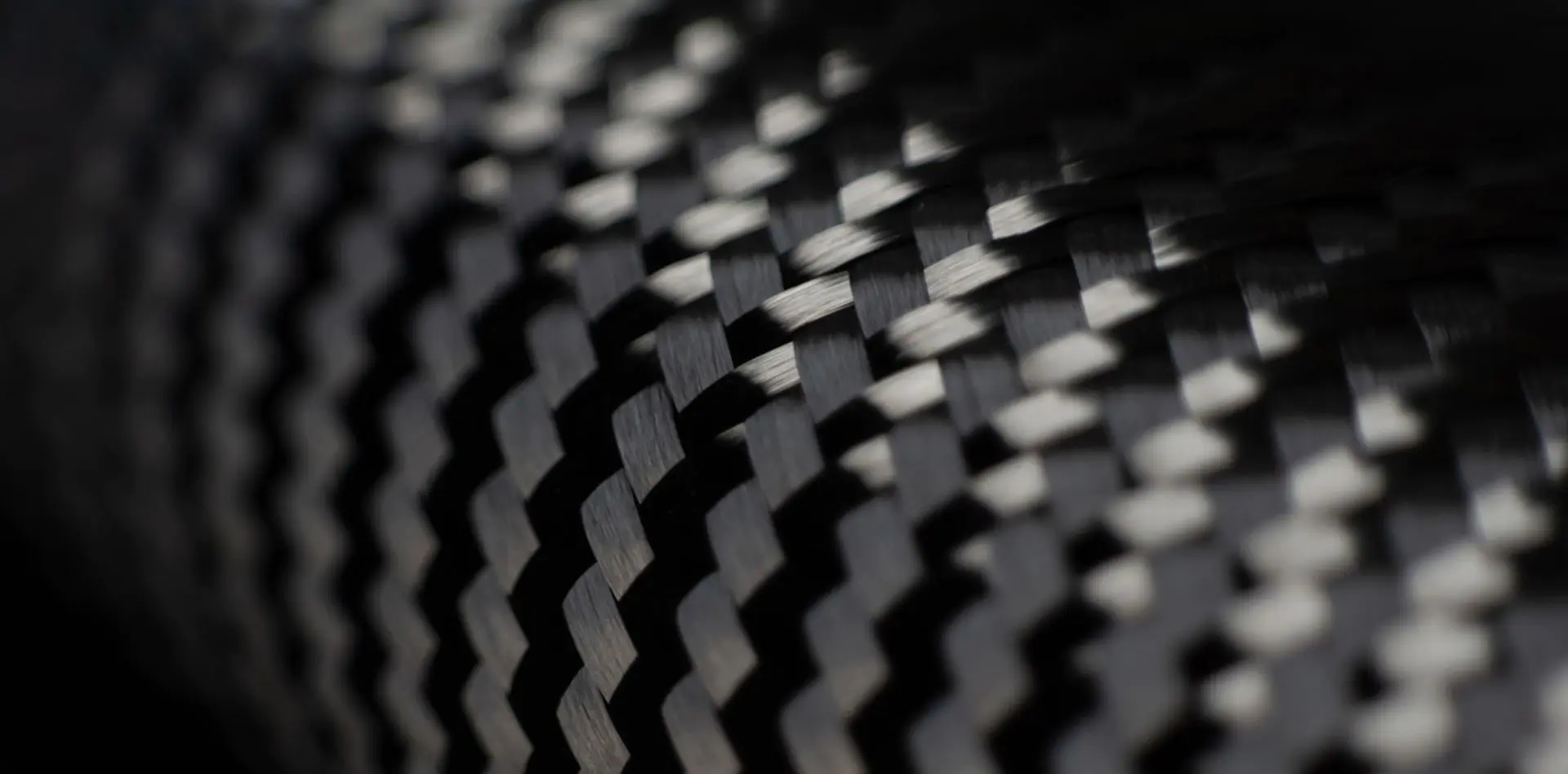
Carbon fiber cloth — also called carbon fiber fabric, woven carbon fiber, or CF cloth — is the most widely recognized carbon fiber reinforcement format. For composite manufacturers, the choice between twill weave and plain weave at 200g/m² is one of the most common specification decisions. Each weave pattern offers different drape, appearance, and mechanical characteristics that affect both manufacturing and final part performance.
This guide helps B2B buyers, engineers, and production teams select the right carbon fiber woven cloth for their application based on our production experience manufacturing T300 3K carbon fiber cloth for automotive, aerospace, motorsport, and industrial composite markets.
Our Carbon Fiber Cloth Product Range
We manufacture carbon fiber woven cloth in two standard constructions, both using T300-grade 3K carbon fiber tow:
| Product | GSM | Weave | Tow Size | Key Characteristics |
|---|---|---|---|---|
| Carbon Fiber Twill Cloth | 200 g/m² | 2×2 Twill | 3K T300 | Superior drape, diagonal pattern, premium appearance |
| Carbon Fiber Plain Cloth | 200 g/m² | Plain (1×1) | 3K T300 | Maximum stability, balanced strength, flat surface |
Both products use Toray T300-grade carbon fiber (tensile modulus 230 GPa, tensile strength 3530 MPa) — the industry standard for structural composite reinforcement. Standard roll widths are 1000mm and 1270mm.
For hybrid options combining carbon with glass fiber, see our carbon-glass hybrid cloth (200–240g).
Twill Weave vs Plain Weave: How to Choose
The weave pattern is not just cosmetic — it fundamentally affects how the fabric handles during layup and performs in the final part.
2×2 Twill Weave Carbon Fiber Cloth
In a 2×2 twill weave, each tow passes over two and under two crossing tows, creating a distinctive diagonal pattern. This construction gives twill its characteristic advantages:
- Superior drape: Conforms to complex curves and compound shapes more easily than plain weave.
- Premium visual appearance: The diagonal pattern is the iconic "carbon fiber look" used in automotive and motorsport.
- Slightly higher mechanical properties: Less crimp than plain weave means fibers work more efficiently (typically 3–5% improvement).
- Smoother surface finish: Fewer interlacing points create a flatter surface.
- Better wet-out: More open structure allows faster resin penetration.
Best for: Complex-shaped parts, visible surfaces, automotive body panels, motorsport components, and any application where drape and appearance matter.
Plain Weave Carbon Fiber Cloth
In a plain weave, each tow passes over one and under one crossing tow — the simplest and most stable interlacing pattern:
- Maximum fabric stability: Tightest interlocking prevents fiber shifting during handling and layup.
- Balanced bi-directional strength: Equal properties in warp and weft directions.
- Best for flat or gently curved parts: Ideal when the geometry does not require high drape.
- Easier cutting: Less prone to fraying at cut edges than twill.
- Good for beginners: More forgiving during hand layup — stays in position better.
Best for: Flat panels, tubes, simple geometries, structural applications where stability matters more than drape, and applications where the weave pattern is not visible.
Direct Comparison
| Factor | 2×2 Twill (200g) | Plain Weave (200g) |
|---|---|---|
| Drape / conformability | Excellent — complex curves | Moderate — flat/gentle curves |
| Fabric stability | Good | Excellent |
| Visual appearance | Premium diagonal pattern | Classic checkerboard |
| Mechanical efficiency | Slightly higher (less crimp) | Slightly lower (more crimp) |
| Resin wet-out speed | Faster | Slower |
| Cut edge fraying | Moderate | Low |
| Surface smoothness | Smoother | Slightly textured |
| Price | Same | Same |
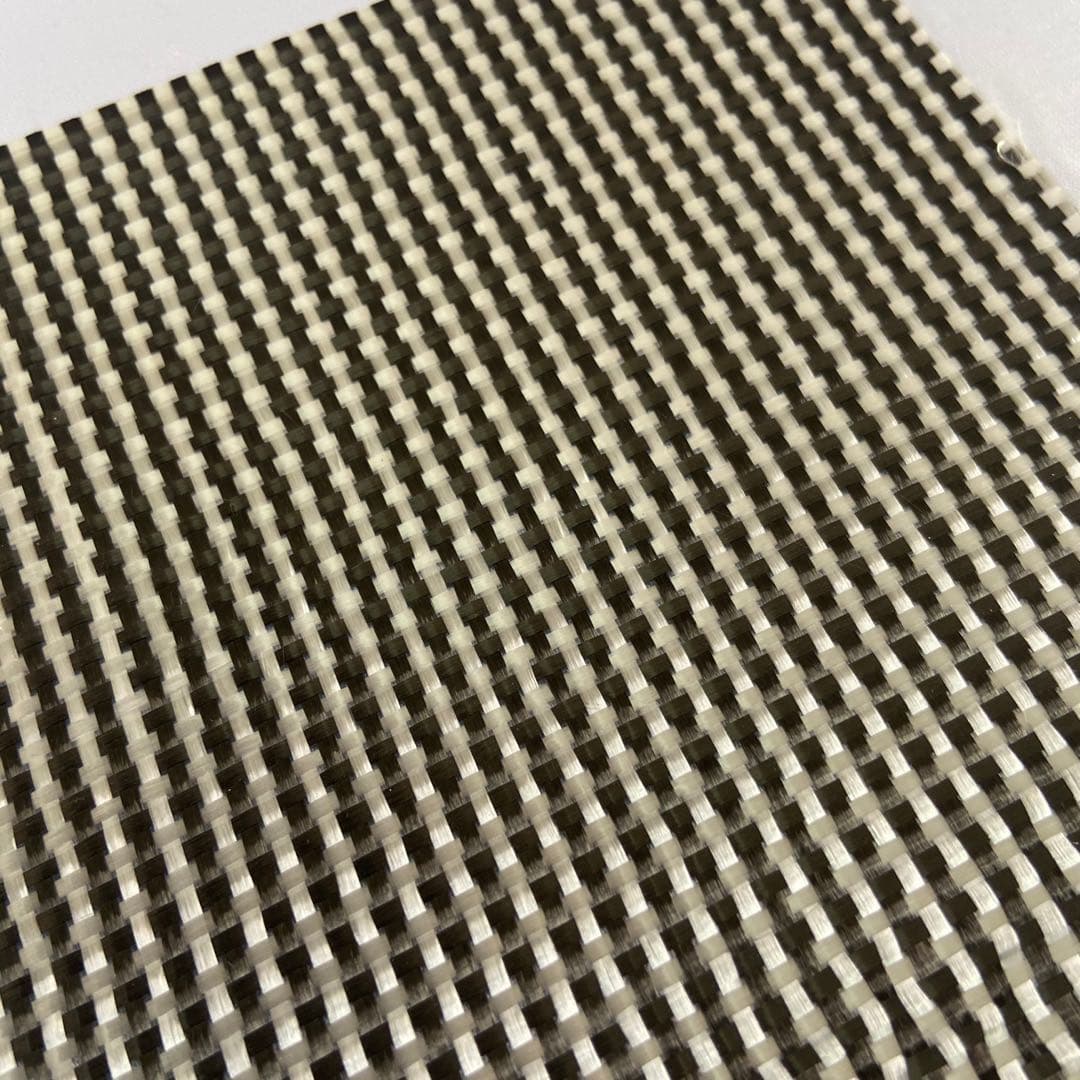
Rule of thumb: Choose twill when the part has complex geometry or the carbon weave will be visible. Choose plain when fabric stability during layup is critical or the part is flat/tubular.
Applications by Industry
Automotive and Motorsport
- Body panels, hoods, spoilers, and mirror covers (twill — visible A-side)
- Structural reinforcement behind panels (plain — stability priority)
- Interior trim and dashboard components (twill — premium appearance)
- Roll cage reinforcement and structural tubes (plain — balanced loading)
Aerospace and UAV
- Secondary structures and fairings
- UAV airframes and wing skins
- Interior panels and equipment housings
- Antenna radomes (plain — consistent dielectric properties)
Industrial and Equipment
- Robotic arm components and machine covers
- Sporting goods: tennis rackets, ski poles, fishing rods
- Musical instruments: guitar tops, drum shells
- Medical equipment housings and prosthetics
Marine
- Mast reinforcement and boom tubes
- Deck hardware and fittings
- Racing yacht components
- Hydrofoil structures
For application-specific guidance, visit carbon fiber applications.
Processing Guide
Resin Compatibility
Our 200g carbon fiber cloth is compatible with all standard composite resin systems:
| Resin System | Compatibility | Notes |
|---|---|---|
| Epoxy | Excellent | Best wet-out, highest mechanical properties |
| Vinyl ester | Good | Good chemical resistance, slightly lower adhesion |
| Polyester | Acceptable | Cost-effective, adequate for non-critical parts |
| Phenolic | Good | Fire resistance applications |
Epoxy resin systems provide the best fiber-matrix adhesion and are recommended for structural and visible applications.
Manufacturing Process Matching
| Process | Suitability | Key Consideration |
|---|---|---|
| Hand layup | Excellent | Most common process for carbon cloth |
| Vacuum bagging | Excellent | Improves fiber volume fraction and surface quality |
| Prepreg/autoclave | Excellent | Highest performance — requires prepreg-format cloth |
| Resin infusion (VARTM) | Good | Verify flow characteristics with your mold geometry |
| Compression molding | Good | Ensure proper fiber placement before mold closure |
| Wet layup + vacuum | Excellent | Good balance of quality and cost |
Layup Tips
- Orientation marking: Always mark the 0° direction on each ply. Misaligned plies are the most common defect in carbon fiber laminates.
- Cutting: Use rotary cutters or CNC cutting tables. Scissors fray carbon fiber edges.
- Storage: Keep rolls sealed in polyethylene bags, away from UV and moisture. Shelf life is indefinite for dry fabric.
- Handling: Wear gloves — skin oils can reduce resin adhesion. Carbon fiber splinters are irritating to skin.
- Ply count: For a typical 1.5mm structural panel, expect 6–8 plies of 200g cloth depending on resin content and compaction.
Carbon Fiber Cloth vs Other Reinforcement Formats
| Format | GSM Range | When to Choose |
|---|---|---|
| Carbon fiber woven cloth (this product) | 200 g/m² | Structural + visual, hand layup, versatile |
| Carbon fiber surface mat | 10–30 g/m² | Surface finish, conductivity, functional layers |
| Carbon-glass hybrid cloth | 200–240 g/m² | Cost reduction vs full carbon, distinctive appearance |
| Carbon fiber UD tape | 150–300 g/m² | Maximum unidirectional strength, automated layup |
| Multiaxial fiberglass | 300–1200 g/m² | High-volume structural, wind energy, cost-effective |
Next Step
Before requesting a quote, use the carbon fiber fabric specification guide to define the product fields, then complete the composite reinforcement RFQ checklist with your process, quantity, packaging, and document requirements.
Whether you need 200g twill cloth for visible automotive panels or plain weave for structural flat laminates — we manufacture both in T300 3K format with standard stock availability. Compare the full carbon fiber product range, explore carbon fiber applications, or send your specifications through the contact page. Sample rolls (10–50m) ship within 3–5 business days to most countries.
Related Guides
Frequently Asked Questions
"3K" refers to the tow size — each carbon fiber bundle contains 3,000 individual filaments. 3K tow produces a finer weave pattern with smaller yarn width, resulting in better surface aesthetics and good drapeability. Larger tow sizes (6K, 12K) produce coarser patterns, are less expensive per kg, but have different visual and handling characteristics. Our 200g cloth uses 3K T300 tow — the industry standard for premium composite parts.
Yes. At 200g/m² with T300 fiber, each ply provides meaningful structural reinforcement. A typical 6–8 ply laminate (1.2–1.6mm cured thickness) delivers excellent stiffness and strength for automotive, aerospace, and industrial structural applications. For comparison, a 6-ply carbon fiber laminate can be 3–4× stiffer than equivalent-weight aluminum.
T300 (tensile modulus 230 GPa, strength 3530 MPa) is the standard-modulus grade used in most composite applications. T700 (tensile modulus 230 GPa, strength 4900 MPa) offers ~40% higher tensile strength at higher cost. Our woven cloth uses T300 — suitable for the vast majority of structural and decorative applications. For T700 requirements, we offer carbon fiber yarn in 12K format.
Carbon fiber cloth is typically 5–10× more expensive per square meter than equivalent-weight E-glass fiberglass cloth. However, carbon provides 3–4× higher stiffness at 30–40% lower weight, so the cost per unit of performance is often competitive. For cost-sensitive applications, consider our [carbon-glass hybrid cloth](/blog/carbon-glass-hybrid-fabric-benefits) which offers 20–40% cost savings vs full carbon.
Yes — many applications use a single ply of carbon fiber twill cloth as a visible surface layer backed by fiberglass or other lower-cost reinforcement. This gives the premium carbon fiber appearance at a fraction of the cost of a full carbon laminate. Our twill cloth is specifically popular for this "carbon skin" approach in automotive and consumer products.
Dry (non-prepreg) carbon fiber cloth stored in sealed polyethylene packaging at room temperature has an indefinite shelf life. There is no degradation of fiber properties over time. Prepreg formats have limited shelf life (typically 6–12 months frozen) — but our standard products are dry fabric, not prepreg.

Author
ZeYuSen Fiber Technical Team
Focused on fiberglass mats and veils, carbon fiber mats, and desiccant rotor forming paper for industrial material selection and process evaluation.
Need help choosing a material?
Send your application, process, and target specifications. ZeYuSen Fiber can help evaluate carbon fiber mats, fiberglass mats and veils, or desiccant rotor forming paper.
Contact ZeYuSen FiberOn this page
- Our Carbon Fiber Cloth Product Range
- Twill Weave vs Plain Weave: How to Choose
- 2×2 Twill Weave Carbon Fiber Cloth
- Plain Weave Carbon Fiber Cloth
- Direct Comparison
- Applications by Industry
- Automotive and Motorsport
- Aerospace and UAV
- Industrial and Equipment
- Marine
- Processing Guide
- Resin Compatibility
- Manufacturing Process Matching
- Layup Tips
- Carbon Fiber Cloth vs Other Reinforcement Formats
- Next Step