
Basalt Fiber Mat for Composites: Selection & Validation Guide
Evaluate basalt fiber mat by format, areal weight, binder or sizing, resin, process, supplier evidence, and a controlled laminate trial.
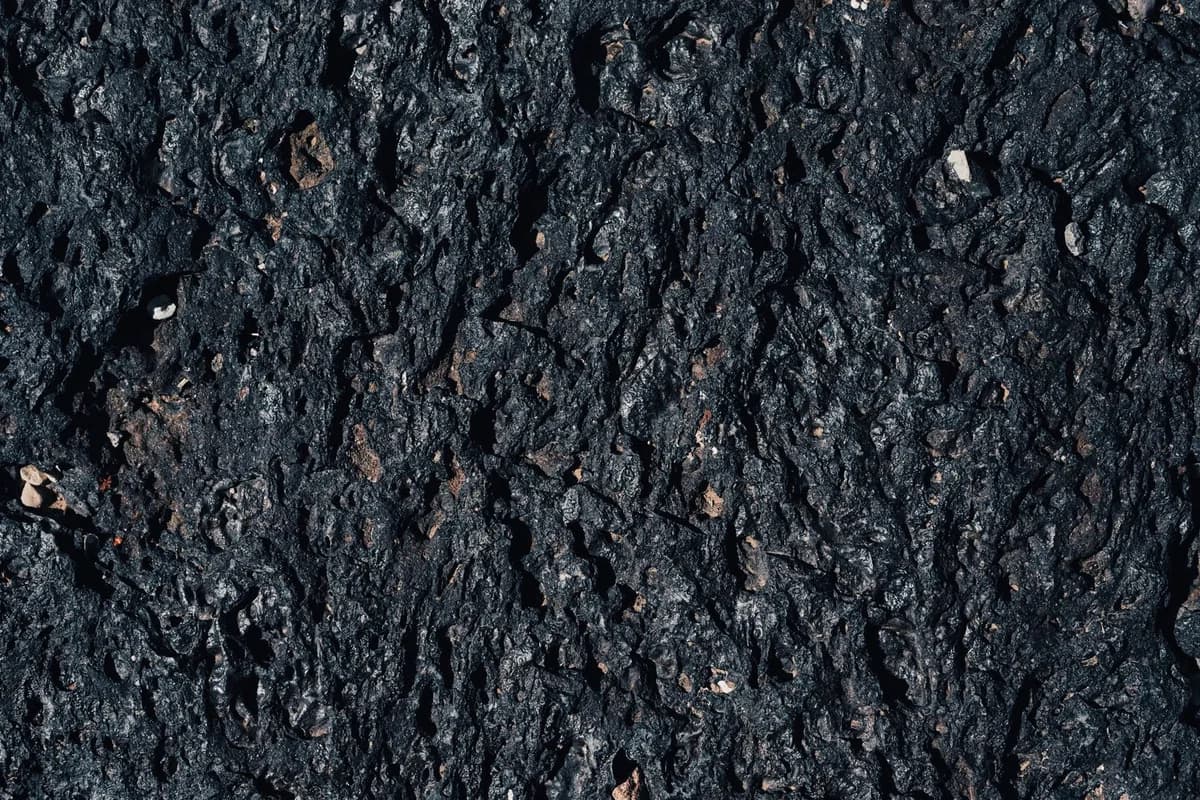
Basalt fiber mat is a nonwoven reinforcement made with fibers derived from basalt rock. Composite buyers often evaluate it when they want another mineral-fiber option beside fiberglass, but “basalt” is not a complete laminate specification. Mat architecture, areal weight, binder or sizing, resin interface, process, and test conditions can matter as much as the fiber family.
The safest selection method is to compare basalt and the incumbent reinforcement in the same laminate role and under the same test conditions. A lightweight basalt veil should not be compared directly with a heavy chopped strand mat or woven structural fabric simply because all are sold by area.
Quick Decision Guide
| Buyer question | Evidence to request | Decision boundary |
|---|---|---|
| Will it run in our process? | Roll specification, dry handling, wet-out trial, defect limits | Approve on representative equipment and geometry |
| Is it compatible with our resin? | Binder or sizing designation, supplier statement, cured coupon | Fiber name alone does not prove adhesion |
| Is it suitable for temperature exposure? | Composite-level test with the actual resin, cure, load, and duration | Do not transfer a bare-fiber temperature claim to the laminate |
| Does it improve durability or chemical performance? | Defined exposure method and retained properties | Avoid generic “chemical resistant” claims |
| Can it replace fiberglass? | Like-for-like laminate comparison, supply and cost data | Replacement is conditional, not automatic |
| Can we source it consistently? | Product code, tolerances, lot records, capacity and change control | A successful sample does not prove repeatable supply |
What Basalt Fiber Mat Is—and Is Not
Continuous basalt fiber is produced by melting a selected basalt rock feedstock and drawing it into filaments. Those filaments can then become roving, woven fabric, chopped fiber, or nonwoven mat. The exact mat may be wet-laid, mechanically bonded, needle-punched, or made by another process; “basalt mat” does not identify which construction is being offered.
An open-access review in the Journal of Composites Science describes basalt as a mineral fiber made directly from basalt rock and also notes a central commercial limitation: industrial adoption and comparable data are less mature than for conventional glass reinforcement. That is a reason to request better evidence, not a reason to assume poor or superior performance.
A mat can serve different roles depending on its construction:
- A light veil or tissue can support a surface, barrier, or functional layer.
- A chopped or continuous-strand mat can contribute distributed reinforcement and laminate build.
- A needled mat may be selected for thickness, insulation, filtration, or preform handling.
- A woven basalt fabric is a different architecture intended for directional reinforcement.
Always put the format and laminate function beside the fiber name in the RFQ.
Why Buyers Evaluate Basalt Mat
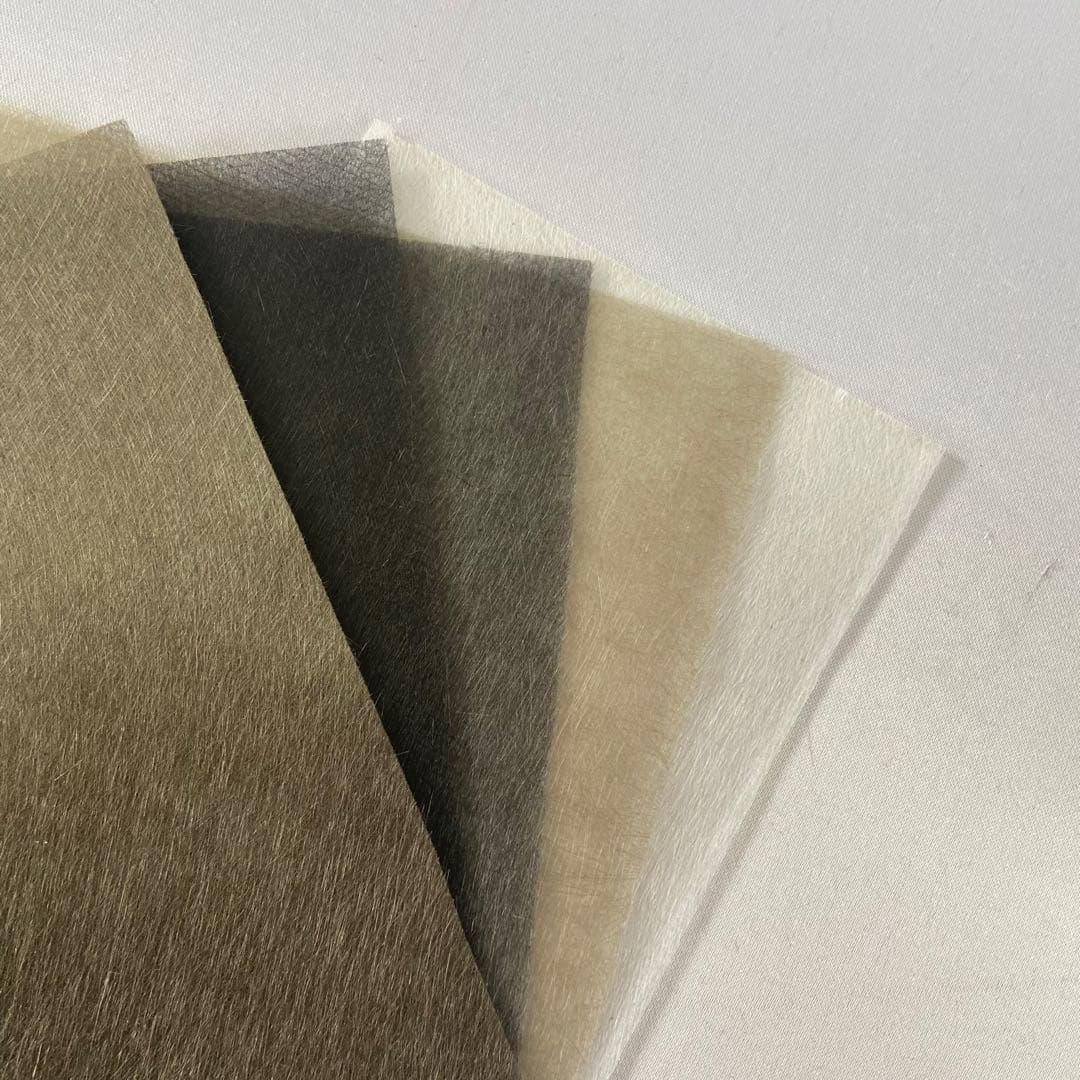
Basalt fiber is commonly investigated for thermal, chemical, moisture, durability, fire, or mechanical requirements. These are test categories, not universal product guarantees. The finished result depends on raw-material composition, filament quality, sizing, mat construction, resin, fiber content, cure, defects, environment, and load.
Use the application requirement to define the evidence:
| Requirement | Useful supplier or trial evidence | Incomplete evidence |
|---|---|---|
| Elevated-temperature service | Test temperature, duration, atmosphere, load, resin, retained property | Maximum fiber temperature with no laminate conditions |
| Chemical exposure | Chemical, concentration, temperature, immersion time, dimensional or retained-property result | “Corrosion resistant” without a method |
| Structural contribution | Areal weight, thickness, fiber fraction, orientation, resin, coupon method and variability | Single tensile value with no laminate description |
| Surface or barrier role | Wet-out, porosity, print-through, defects, adhesion, reference panel | Appearance of the dry roll |
| Fire performance | Named test method, specimen build, thickness, conditioning, classification | “Non-combustible fiber” applied to an organic-resin laminate |
| Production handling | Width tolerance, roll build, tensile handling, splice rule, process trial | A small hand-cut sample only |
This evidence-first approach also prevents a common error: turning a property reported for one woven basalt/epoxy study into a claim for every basalt mat and resin combination.
Basalt Mat vs Fiberglass: Compare the Same Role
Fiberglass has a broad supply base and many standardized or familiar formats. Basalt may be useful when its particular format and tested system fit the requirement, but the comparison must be controlled.
- Match architecture: veil to veil, chopped mat to chopped mat, woven to woven.
- Match or record areal weight, thickness, and fiber fraction.
- Use the same resin formulation, cure, conditioning, and specimen geometry.
- Test the property that governs the part—not only an easy tensile coupon.
- Compare variation and defects, not just the best result.
- Include conversion yield, scrap, cycle time, qualification effort, documentation, and supply risk in the commercial comparison.
The separate basalt fiber versus fiberglass guide provides a full material-family comparison. For a particular project, the trial matrix below is more important than a generic winner.
Start With the Current Product Format
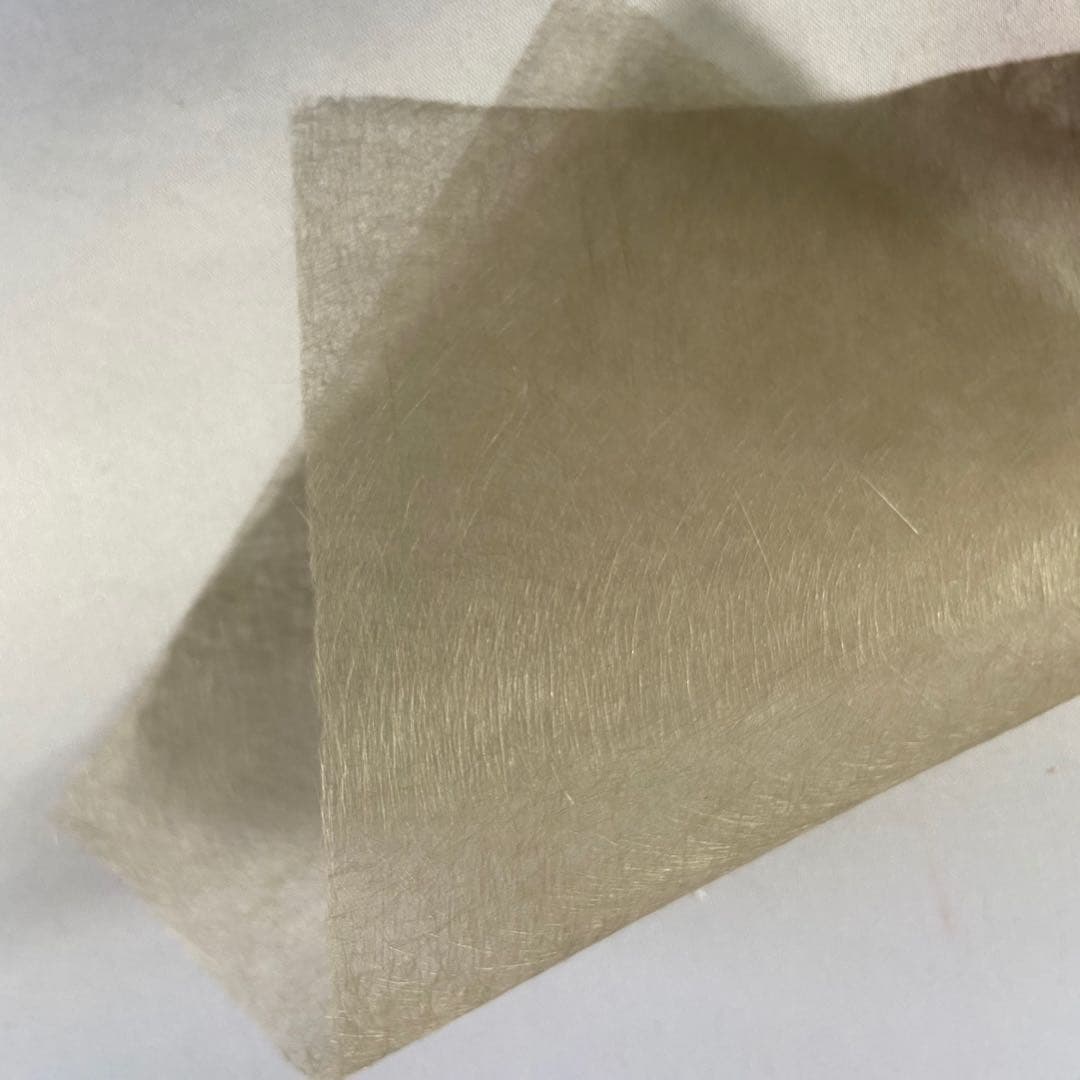
The ZeYuSen catalog currently presents a 30 g/m² basalt fiber mat. At that areal weight it should be discussed as a lightweight mat or veil candidate, not silently treated as equivalent to a much heavier fiberglass CSM or a woven load-carrying fabric.
Before ordering, confirm the current technical sheet and these fields:
- Product code and manufacturing construction.
- Nominal areal weight and tolerance.
- Thickness and test pressure, if reported.
- Fiber length or web structure, where relevant.
- Binder or sizing chemistry and content.
- Compatible resin and intended process.
- Usable width, roll length or diameter, core, splices, and edge quality.
- Storage life and moisture protection.
- Lot identification, certificate, and change-control policy.
Do not use a website temperature statement as a design limit. Ask for the applicable test method and specimen construction, then validate the complete composite under the project’s time, temperature, atmosphere, and load.
Resin, Sizing, and the Fiber–Matrix Interface
The resin must wet the mat, and the cured interface must transfer load without unacceptable voids or separation. A 2025 review of basalt-fiber surface modification and composites identifies fiber–resin interfacial bonding as a key factor in composite performance. The 2022 industrial review likewise notes that sizing affects chemical and mechanical bonding and that resin compatibility depends on the treatment used.
For procurement, convert that research point into four questions:
- What binder and sizing are on the offered grade?
- Which resin systems and processes has the supplier evaluated?
- Is the compatibility statement based on a named test or only general experience?
- What changes require customer notification—fiber source, sizing, binder, line, or location?
If the answer is only “compatible with all resins,” request supporting data and run a controlled coupon trial. The reinforcement sizing and resin compatibility guide contains a broader checklist.
A Controlled Trial Plan
Build a small trial that represents production closely enough to answer the real decision.
Step 1: Define the incumbent and candidate
Record supplier, product code, architecture, areal weight, thickness, binder or sizing, width, and lot for both materials. State whether the goal is replacement, a surface layer, a hybrid stack, or a new function.
Step 2: Freeze the process variables
Use the same tooling, resin batch, mix ratio, reinforcement sequence, fiber target, consolidation, cure, post-cure, and conditioning unless a planned process change is part of the trial.
Step 3: Record manufacturability
Measure or rate cutting, fraying, dust, drape, fiber movement, wet-out, trapped air, wrinkles, resin usage, consolidation, cycle time, finished thickness, and scrap. A technically acceptable coupon can still be commercially unsuitable if conversion is unstable.
Step 4: Test the governing requirement
Choose tests from the part’s failure mode and service environment. Depending on the project, that may include mechanical coupons, thermal cycling, immersion, moisture conditioning, adhesion, fire testing, filtration performance, dimensional stability, or visual criteria.
Step 5: Compare repeatability
Use enough specimens and more than one roll or lot when the risk justifies it. Record average, spread, failure mode, and process defects. Define the acceptance rule before seeing the result.
Step 6: Approve the specification—not just the sample
Tie approval to the product code, declared construction, binder or sizing, tolerance, documents, reference laminate, and change notification. Otherwise a later material change may remain technically “basalt mat” while no longer matching the qualified input.
RFQ Template for Basalt Fiber Mat
- Application and laminate role: [surface, barrier, reinforcement, insulation, filtration, other]
- Required format: [veil / chopped mat / continuous mat / needled mat]
- Areal weight, thickness, and tolerance: [values and test conditions]
- Binder / sizing: [designation, content, or compatibility requirement]
- Resin and manufacturing process: [grade and process]
- Service conditions: [temperature profile, chemicals, moisture, load, fire or other exposure]
- Roll format: [width, length or diameter, core, edge, splice limit]
- Acceptance tests: [named methods, specimen build, values or approved reference]
- Documents: [TDS, SDS, CoA, lot traceability, declarations, change notification]
- Trial and production quantity / destination: [requirements]
Common Mistakes to Avoid
- Comparing unlike reinforcement formats and attributing every difference to the fiber.
- Repeating bare-fiber temperature or non-combustibility claims for a resin-rich laminate.
- Choosing basalt because it sounds “natural” without a product-specific environmental assessment.
- Ignoring binder or sizing while evaluating resin adhesion.
- Qualifying one hand-made coupon but not production handling, variability, or roll quality.
- Comparing material price per kilogram while omitting yield, resin use, scrap, cycle time, qualification, and supply risk.
- Publishing exact performance, service-life, or cost advantages without the tested laminate and conditions.
Next Step
Review the current basalt fiber mat product, then send ZeYuSen Fiber your RFQ with the intended laminate role, resin, process, service conditions, test method, roll format, and trial quantity. If you are still choosing the material family, compare equivalent formats in the basalt versus fiberglass selection guide first.
Related Guides
Frequently Asked Questions
Not automatically. Match architecture, weight, resin, process, and laminate role, then compare the required property with the same test and conditioning.
It may be evaluated for elevated-temperature applications, but the qualified limit belongs to the complete composite system. Resin, binder or sizing, load, time, atmosphere, thickness, and test method all matter.
There is no universal answer based only on the fiber. Confirm the product’s binder or sizing, supplier evidence, viscosity and process needs, cure, and interface performance with the exact resin grade.
Start with representative processability and a cured reference laminate. Then test the actual governing requirement—such as thermal exposure, chemical immersion, mechanical performance, or filtration—instead of relying on dry-mat appearance.

Author
ZeYuSen Fiber Technical Team
Focused on fiberglass mats and veils, carbon fiber mats, and desiccant rotor forming paper for industrial material selection and process evaluation.
Need help choosing a material?
Send your application, process, and target specifications. ZeYuSen Fiber can help evaluate carbon fiber mats, fiberglass mats and veils, or desiccant rotor forming paper.
Contact ZeYuSen FiberOn this page
- Quick Decision Guide
- What Basalt Fiber Mat Is—and Is Not
- Why Buyers Evaluate Basalt Mat
- Basalt Mat vs Fiberglass: Compare the Same Role
- Start With the Current Product Format
- Resin, Sizing, and the Fiber–Matrix Interface
- A Controlled Trial Plan
- Step 1: Define the incumbent and candidate
- Step 2: Freeze the process variables
- Step 3: Record manufacturability
- Step 4: Test the governing requirement
- Step 5: Compare repeatability
- Step 6: Approve the specification—not just the sample
- RFQ Template for Basalt Fiber Mat
- Common Mistakes to Avoid
- Next Step