fiberglassmultiaxial fabricnon-crimp fabricbiaxial stitched matwind energystructural reinforcement

Multiaxial Fiberglass Fabric Guide (300-1200gsm)

泽宇森纤维技术团队

Select multiaxial fiberglass fabric and biaxial stitched mats for wind turbine blades, nacelle covers, and structural composites with orientation guidance.

Multiaxial fiberglass fabric for wind energy composites

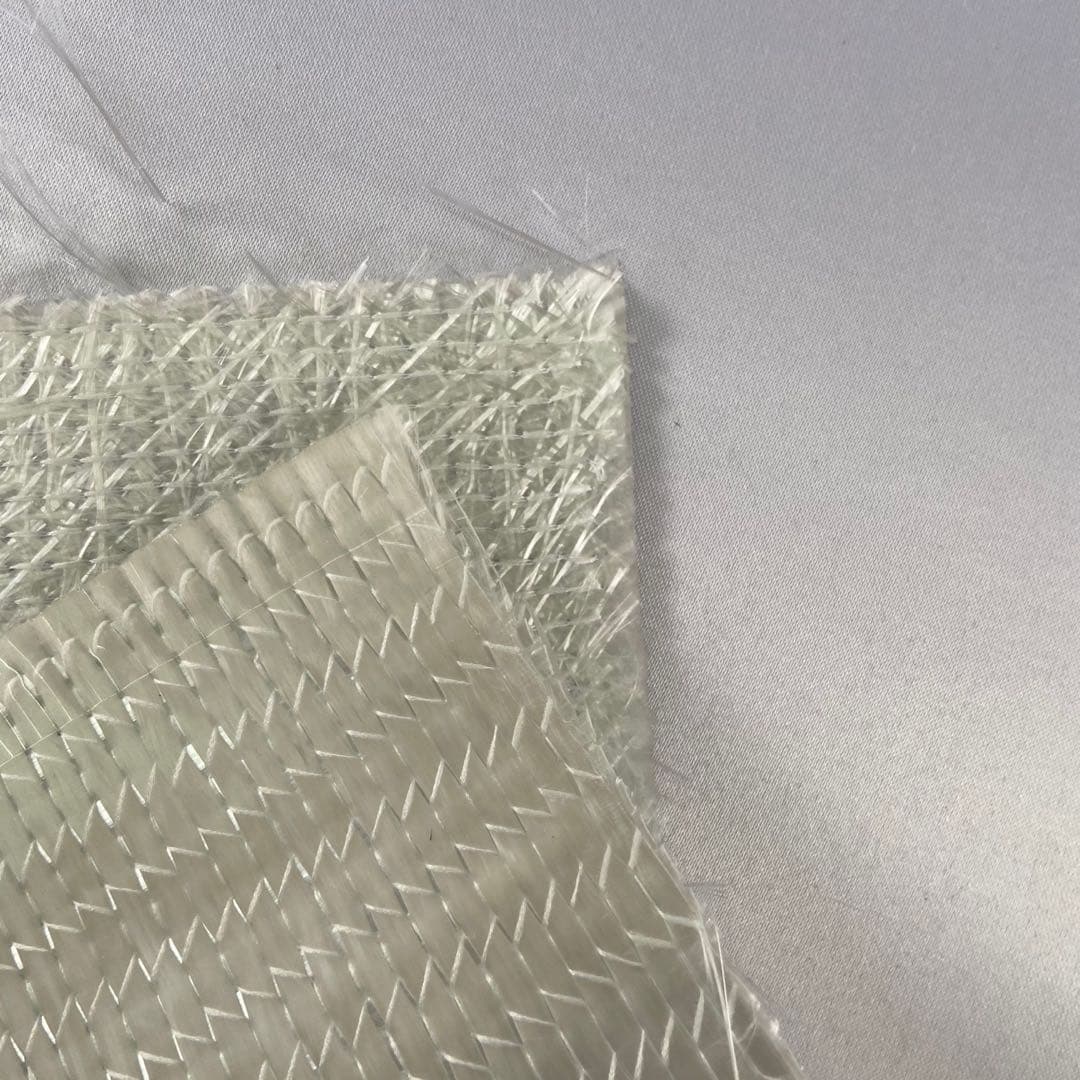
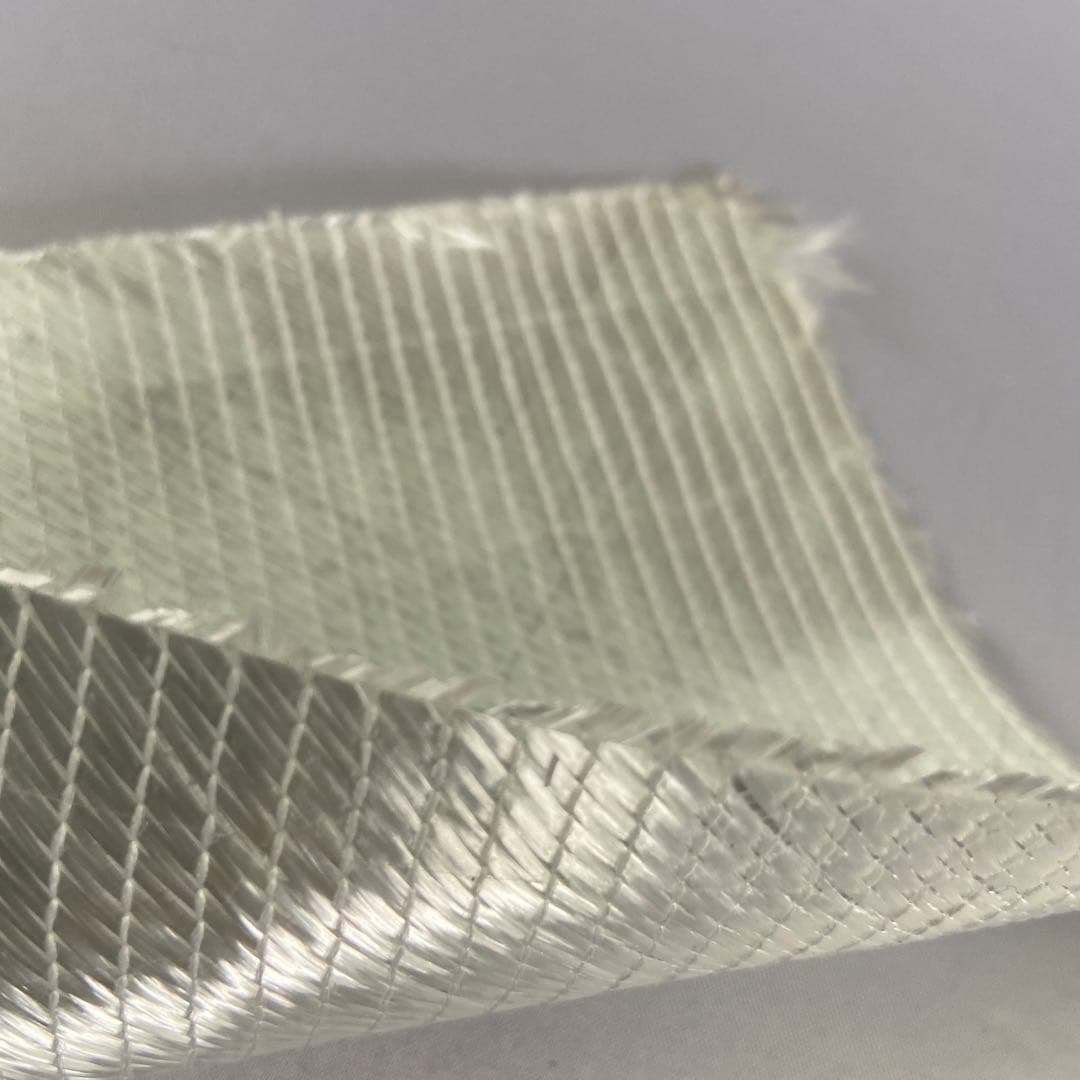
Multiaxial fiberglass fabric — also called non-crimp fabric (NCF), stitched fabric, or multi-ply reinforcement — is designed for composite parts that need strength in more than one direction. Instead of relying only on a traditional woven 0°/90° structure, multiaxial reinforcements place fibers at engineered angles such as ±45°, 0°/90°, or combined orientations to match the load path of the part.

This makes multiaxial fiberglass fabric the preferred reinforcement for wind turbine blades, nacelle covers, marine structures, transportation panels, and other high-performance composite applications where engineered fiber placement reduces weight and improves mechanical efficiency. Based on our production experience supplying wind energy manufacturers across 50+ countries, we offer multiaxial and biaxial stitched mats from 300g/m² to 1200g/m².

What Makes Multiaxial Fabric Different

A woven fabric interlaces yarns, which creates crimp — small undulations where fibers cross over each other. This crimp reduces the effective stiffness and strength of the fiber by 10–20% compared to straight fibers. Multiaxial fabric is typically stitched (non-crimp fabric, or NCF), allowing fibers to remain straighter and work more efficiently under load.

Key advantages include:

  • Directional strength tailored to the part's actual load path.
  • Higher fiber efficiency — straighter fibers mean better use of material properties.
  • Efficient laminate build-up with fewer plies needed.
  • Reduced need for many separate fabric layers — a single multiaxial ply can replace 2–4 unidirectional layers.
  • Better control over reinforcement orientation with consistent ply-to-ply alignment.
  • Useful handling stability from stitched construction — less prone to fraying than UD tape.
  • Improved infusion characteristics — stitch channels can aid resin flow.

Explore related glass fiber materials and glass fiber products.

Our Multiaxial and Biaxial Product Range

We manufacture a complete range of stitched fiberglass reinforcements optimized for wind energy and structural composite applications:

ProductGSMOrientationPrimary Applications
Multiaxial Fiberglass Fabric300 g/m²±45° biaxialWind turbine nacelle covers, lightweight structural shells
Unidirectional Stitched Mat450 g/m²0° (UD)Wind energy pultrusion profiles, spar caps
Biaxial Stitched Mat ±45°900 g/m²±45°Wind turbine nacelle, torsion-loaded structures
Biaxial Stitched Mat 0/90°900 g/m²0°/90°Wind energy panels, balanced in-plane loading
Grid Stitched Composite Mat1050 g/m²Grid patternNacelle covers, large structural panels
Multiaxial Stitched Mat1200 g/m²QuadraxialWind turbine blades, high-load structural shells

All products use E-glass fiber with polyester stitching thread. Custom GSM, width (up to 2500mm), and orientation combinations are available for orders above 500m².

Biaxial fiberglass reinforcement

Common Fiber Orientations

Different orientations support different load cases:

OrientationTypical PurposeCommon Applications
0° (unidirectional)Lengthwise tensile/compressive strengthSpar caps, pultrusion profiles
90°Crosswise reinforcementPanel stiffening, hoop strength
±45° (biaxial)Torsion and shear resistanceTube wrapping, torsion members
0°/90° (biaxial)Balanced in-plane loadingFlat panels, decks, floors
0°/±45°/90° (quadraxial)Quasi-isotropic performanceHulls, structural shells
±45°/core/±45° (sandwich)Shear + core integrationLightweight panels

For example, ±45° reinforcement is essential where a part experiences twisting or shear — such as drive shafts, wind turbine blade skins, or boat hulls under wave loading. A 0°/90° structure is often used for panels and beams where loads align with the part geometry.

The ability to combine multiple orientations in a single fabric ply is what makes multiaxial reinforcement so efficient for structural applications.

Wind Energy: The Primary Application for Multiaxial Fiberglass

Wind turbine manufacturing is the largest consumer of multiaxial fiberglass reinforcement globally. Every major blade and nacelle component uses specific orientations matched to its load case:

Turbine blade spar caps use 0° unidirectional stitched mat (our 450g UD mat) to resist the enormous bending loads along the blade length. Spar caps can be 50–100mm thick, built up from many UD plies — making layup efficiency critical.

Blade skins and shear webs use ±45° biaxial fabric (our 900g ±45° biaxial mat) to resist torsional and shear loads. The ±45° orientation is specifically engineered for the twisting forces that wind loads create.

Nacelle covers and structural shells use quadraxial (0°/±45°/90°) reinforcement (our 1200g multiaxial mat) for quasi-isotropic performance — these large panels must resist loads from multiple directions including wind, snow, and maintenance access.

Root sections use heavy multiaxial reinforcement where the blade connects to the hub — the highest-stress region requiring maximum fiber volume fraction.

Our stitched mats are designed for vacuum infusion (VARTM), the dominant process in wind blade manufacturing. The stitch channels between fiber bundles create natural resin flow paths that enable reliable infusion of large blade structures (60–100+ meters).

For wind energy application details, visit glass fiber wind energy applications.

Other Structural Applications

Beyond wind energy, multiaxial fiberglass fabric is used in:

  • Marine: Hulls, decks, bulkheads, and structural stringers — ±45° for torsion resistance, 0°/90° for panel stiffness.
  • Transportation: Truck body panels, rail car components (our PP Core Sandwich Mat is used in high-speed rail), and bus structures.
  • Infrastructure: Bridge decks, cooling tower panels, and structural profiles.
  • Industrial: Pressure vessels, tanks, pipes, and large enclosures.
  • Pultrusion: Continuous profiles requiring specific fiber orientation — our 450g UD stitched mat is designed specifically for pultrusion processes.
  • Building materials: Cladding panels and structural insulated panels.

For application ideas, visit glass fiber applications.

Fiberglass fabric roll for structural composites

Multiaxial vs Woven: When to Choose Which

FactorMultiaxial (Stitched)Woven
Fiber efficiencyHigher (no crimp)Lower (crimp loss 10–20%)
Drape/conformabilityModerate — depends on stitchGood for complex shapes
Layup speedFaster (fewer plies needed)Slower (more plies for same result)
Cost per kgOften higherOften lower
Resin infusionGood — stitch channels aid flowVariable — depends on weave
Surface finishStitch pattern may showSmoother for cosmetic parts
AvailabilityStandard orientations stockedWide variety available
Minimum orderMay be higher for custom layupsLower for standard weaves

Rule of thumb: Choose multiaxial when structural performance and layup efficiency matter more than surface cosmetics or small-batch flexibility. Choose woven when drape, surface finish, or low MOQ is the priority.

Selection Questions for Buyers

Before sourcing multiaxial fiberglass fabric, clarify:

  1. Load directions: Which directions carry the primary loads? This determines orientation.
  2. Manufacturing process: Hand layup, vacuum infusion, RTM, pultrusion, or compression molding?
  3. Resin system: Polyester, vinyl ester, epoxy, or phenolic? Each affects wet-out differently.
  4. GSM and ply count: What total laminate thickness is targeted? (Common multiaxial GSM: 300–1200 g/m²)
  5. Roll width: Standard widths are 1270mm and 1500mm — wider rolls reduce waste on large parts.
  6. Stitch type: Tricot, chain, or modified? Stitch pattern affects drape and permeability.
  7. Core integration: Is a core mat (chopped strand or foam) needed between oriented layers?
  8. Certification: Does the application require material certification (DNV, Lloyd's, aerospace specs)?

A clear laminate target helps avoid over-specifying reinforcement and increasing cost unnecessarily. Share your laminate schedule with the supplier — they can often suggest optimizations.

Processing Tips

  • Infusion: Multiaxial fabrics generally infuse well due to stitch-channel permeability. Run flow trials on representative geometry before production.
  • Cutting: Use CNC or rotary cutting for clean edges. Mark fiber orientation clearly — misaligned plies are a common defect source.
  • Storage: Store rolls horizontally on racks to prevent deformation. Keep sealed until use.
  • Nesting: Plan cut patterns to minimize waste — multiaxial fabric is typically more expensive per m² than basic woven roving.
  • Quality control: Check for stitch damage, fiber misalignment, and GSM consistency across the roll width.

Next Step

Whether you need 300g ±45° biaxial for nacelle covers, 900g stitched mat for structural shells, or 1200g quadraxial for wind turbine blades — we manufacture the full range of non-crimp fiberglass reinforcements. Compare glass fiber product categories, explore wind energy applications, or share your laminate schedule through the contact page. Our engineering team can help select the right orientation, GSM, and construction for your specific load case and manufacturing process. Sample rolls available within 5–7 business days.

相关指南

Frequently Asked Questions

It can be more efficient for certain load paths because fibers remain straighter (no crimp loss) and can be placed at optimized angles. A well-designed multiaxial laminate can achieve 10–20% higher mechanical properties than an equivalent-weight woven laminate. For example, our 900g biaxial stitched mat delivers higher shear strength than equivalent-weight woven roving because the ±45° fibers remain perfectly straight. The final strength depends on orientation, GSM, resin, and laminate design.

Our multiaxial and biaxial stitched mats are specifically designed for vacuum infusion (VARTM) — the dominant process in wind blade manufacturing. The stitch channels between fiber bundles create natural resin flow paths. Our 1200g quadraxial mat, for example, achieves full wet-out in large blade structures when used with standard infusion epoxy systems. However, permeability varies by construction — validate wet-out and flow front progression with your resin and part geometry before committing to production.

Often yes — significantly. Because multiple fiber directions are combined in one reinforcement, a single quadraxial ply (like our 1200g mat) can replace four separate unidirectional layers. This can reduce layup time by 40–60% for structural laminates, with fewer opportunities for ply placement errors. For wind blade manufacturers producing hundreds of blades per year, this time saving translates directly to production capacity.

They serve different purposes. [Chopped strand mat](/blog/fiberglass-chopped-strand-mat-vs-woven-roving) provides random, isotropic reinforcement at low cost — suitable for non-structural or lightly loaded parts. Multiaxial fabric provides engineered directional strength for structural applications. Many laminates combine both: multiaxial for structural plies, CSM for surface or filler layers.

Biaxial fabric has fibers in two directions (e.g., ±45° or 0°/90°), while multiaxial (triaxial or quadraxial) combines three or four directions in one ply. We offer both: 900g biaxial mats in ±45° and 0°/90° configurations, and 1200g quadraxial mat combining 0°/±45°/90°. Choose biaxial when loads are primarily in two directions; choose quadraxial when quasi-isotropic performance is needed.

Multiaxial fabric typically costs 30–80% more per kg than standard woven roving, depending on construction complexity and order volume. However, the total laminate cost may be lower because fewer plies are needed, layup is faster, and less resin is consumed due to higher fiber volume fraction. For wind energy applications where production volume justifies the material cost, multiaxial reinforcement almost always delivers lower total part cost.

For our standard products (300g ±45°, 450g UD, 900g biaxial, 1200g quadraxial), MOQ is typically 200–500m². Custom orientations, GSM, or widths require 1000m² minimum. [Contact us](/contact) for specific availability and lead times.

ZeYuSen Fiber

Author

ZeYuSen Fiber Technical Team

Specializing in carbon fiber and glass fiber composite materials for aerospace, wind energy, construction, and advanced manufacturing. Our engineering team brings decades of combined experience in composite material selection, process optimization, and quality assurance.

需要帮助选择材料?

请告诉我们您的目标应用、工艺和所需规格。泽宇森纤维可以帮助比较碳纤维和玻璃纤维材料选项。

联系泽宇森纤维
本页目录