carbon fiber yarnchopped carbon fibercarbon fiber powderT300T700carbon fiber raw materials

Carbon Fiber Yarn, Chopped Fiber & Powder Guide

泽宇森纤维技术团队

Compare carbon fiber yarn, chopped fiber, and powder for weaving, molding compounds, wear-resistant materials, and industrial composite applications.

Carbon fiber raw materials

Beyond woven fabrics and non-woven mats, carbon fiber is also supplied in raw material formats — yarn (continuous tow), short cut fiber (chopped strands), and powder (milled fiber). These raw materials serve as feedstock for compounding, molding, additive manufacturing, and specialty composite processes where pre-formed fabrics are not suitable.

We manufacture and supply all three carbon fiber raw material formats, enabling customers to source continuous tow for weaving or filament winding, chopped fiber for injection molding compounds, and milled powder for friction materials and coatings — all from a single qualified supplier.

Our Carbon Fiber Raw Material Products

ProductFormatGrades AvailablePrimary Applications
Carbon Fiber YarnContinuous tow on bobbinT300 3K, T300 6K, T700 12KWeaving, filament winding, pultrusion, braiding
Short Cut Carbon FiberChopped strands (3–12mm)Standard modulusModified plastics, EMI shielding compounds, BMC/SMC
Carbon Fiber PowderMilled fiber (50–200μm)Standard modulusComposite filler, friction materials, wear resistance

All products are manufactured from PAN-based (polyacrylonitrile) carbon fiber precursor, ensuring consistent quality and mechanical properties.

Carbon Fiber Yarn (Continuous Tow)

Carbon fiber yarn is the fundamental building block of all carbon fiber reinforcements. It consists of thousands of continuous carbon filaments (each ~7μm diameter) bundled together into a tow and wound onto bobbins for downstream processing.

Available Grades and Specifications

GradeTow SizeTensile ModulusTensile StrengthDensityTypical Use
T300 3K3,000 filaments230 GPa3530 MPa1.76 g/cm³Fine woven cloth, decorative fabrics, precision parts
T300 6K6,000 filaments230 GPa3530 MPa1.76 g/cm³Medium-weight fabrics, braiding, general structural
T700 12K12,000 filaments230 GPa4900 MPa1.80 g/cm³High-strength structural, filament winding, pultrusion

Key Differences: T300 vs T700

PropertyT300T700
Tensile strength3530 MPa4900 MPa (+39%)
Tensile modulus230 GPa230 GPa (same)
Elongation at break1.5%2.1%
CostStandard20–40% premium
AvailabilityWidely stockedLead time may apply
Best forGeneral structural, decorativeHigh-performance structural, pressure vessels

Selection guidance: Choose T300 for most applications — it offers excellent performance at standard cost and is the industry workhorse. Choose T700 when tensile strength is the critical design driver (pressure vessels, high-stress filament wound parts, aerospace primary structures).

Carbon Fiber Yarn Applications

  • Weaving: Feedstock for producing woven carbon fiber cloth (our 200g twill and plain cloth is woven from T300 3K yarn)
  • Filament winding: Pressure vessels, pipes, drive shafts, rocket motor casings
  • Pultrusion: Continuous structural profiles, rebar, tendons
  • Braiding: Tubes, shafts, and complex hollow structures
  • Overbraiding: Reinforcement over mandrels or existing structures
  • Towpreg/prepreg production: Impregnated tow for automated fiber placement (AFP)

Sizing and Compatibility

Carbon fiber yarn is supplied with a surface sizing (typically epoxy-compatible) that promotes adhesion to the matrix resin. Confirm sizing compatibility with your resin system:

  • Epoxy sizing: Standard, compatible with epoxy and vinyl ester resins
  • Polyamide sizing: For thermoplastic matrix composites (PA6, PA66)
  • Unsized: For specialty applications requiring custom surface treatment
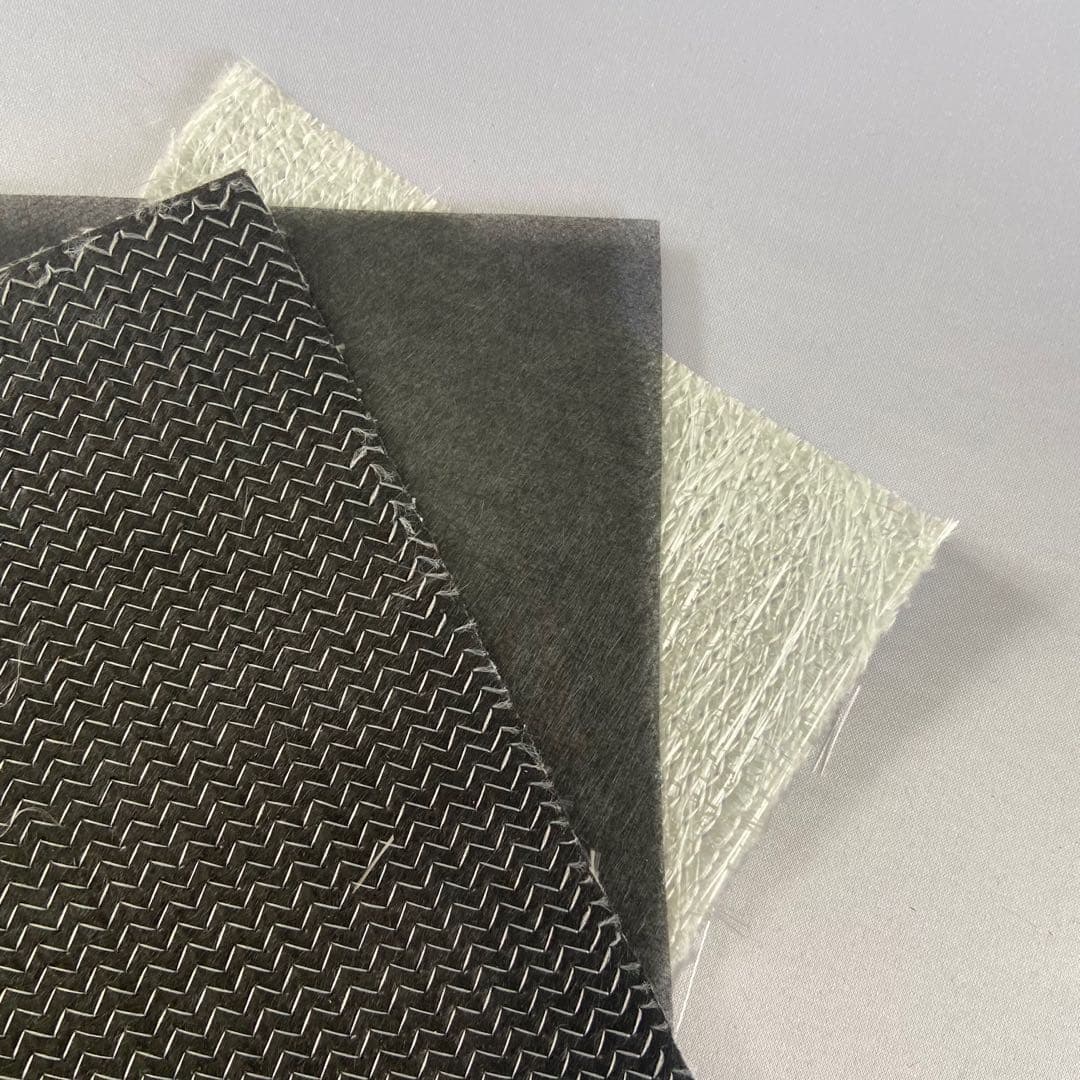
Carbon fiber composite mat product

Short Cut Carbon Fiber (Chopped Strands)

Short cut carbon fiber consists of continuous carbon fiber tow chopped into controlled lengths (typically 3mm, 6mm, or 12mm). These chopped strands are used as reinforcement in compounded plastics, molding compounds, and specialty applications.

Specifications

ParameterTypical Range
Fiber length3mm, 6mm, 12mm (custom lengths available)
Fiber diameter7 μm
Carbon content≥95%
Tensile strength3500+ MPa
Bulk density0.3–0.5 g/cm³
Moisture content<0.5%

Applications for Chopped Carbon Fiber

Modified plastics and injection molding compounds

The largest application for short cut carbon fiber is reinforcing engineering thermoplastics:

  • Carbon fiber reinforced PA (nylon) — 10–40% loading for automotive and industrial parts
  • Carbon fiber reinforced PEEK — aerospace and medical implant components
  • Carbon fiber reinforced PPS — chemical-resistant high-temperature parts
  • Carbon fiber reinforced PC/ABS — consumer electronics housings with EMI shielding

Adding 20–30% chopped carbon fiber to engineering plastics typically delivers:

  • 2–3× improvement in tensile strength
  • 3–5× improvement in flexural modulus
  • Significant weight reduction vs metal alternatives
  • Inherent EMI shielding from conductive fiber network

EMI shielding compounds

Chopped carbon fiber creates a conductive network within plastic parts, providing EMI shielding without metal housings or coatings. At 15–25% loading, shielding effectiveness of 30–50 dB is achievable — sufficient for most consumer electronics and automotive EMC requirements.

BMC/SMC molding compounds

Short cut carbon fiber is used in bulk molding compound (BMC) and sheet molding compound (SMC) for compression-molded parts requiring higher performance than glass fiber compounds.

Concrete and cement reinforcement

Chopped carbon fiber (6–12mm) is added to concrete and cementitious materials to improve crack resistance, flexural strength, and electrical conductivity for heated floors or de-icing applications.

Fiber Length Selection Guide

LengthBest ForTrade-off
3mmInjection molding, thin-wall partsBest flow, lowest reinforcement efficiency
6mmGeneral compounding, BMCBalanced flow and strength
12mmSMC, concrete, high-performance compoundsHighest strength, reduced flow

Shorter fibers flow better in molds but provide less reinforcement. Longer fibers give better mechanical properties but can cause flow issues in thin sections or complex geometries.

Carbon Fiber Powder (Milled Fiber)

Carbon fiber powder is produced by milling (grinding) carbon fiber into very short lengths (50–200μm), creating a fine powder-like material. Unlike chopped fiber which maintains fiber aspect ratio, milled fiber functions more as a particulate filler with some reinforcing capability.

Specifications

ParameterTypical Range
Fiber length50–200 μm
Fiber diameter7 μm
Carbon content≥95%
Bulk density0.4–0.6 g/cm³
Particle size distributionControlled, application-specific

Applications for Carbon Fiber Powder

Friction materials and brake pads

Carbon fiber powder is widely used in automotive and industrial brake pad formulations:

  • Improves thermal stability and fade resistance
  • Reduces wear rate and extends pad life
  • Provides consistent friction coefficient across temperature range
  • Replaces asbestos in modern friction formulations

Wear-resistant coatings and compounds

  • Self-lubricating bearing materials (PTFE + carbon fiber powder)
  • Wear-resistant epoxy floor coatings for industrial facilities
  • Anti-friction additives in gear and bearing compounds

Composite filler and modifier

  • Thixotropic agent in adhesives and sealants
  • Conductivity modifier in coatings and paints
  • Reinforcing filler in potting compounds
  • Thermal conductivity enhancement in electronic encapsulants

3D printing filament additive

Carbon fiber powder is added to FDM/FFF 3D printing filaments (PLA, PETG, nylon) to improve:

  • Dimensional stability (reduced warping)
  • Surface hardness and wear resistance
  • Stiffness (10–20% improvement at 10–15% loading)

Choosing Between Yarn, Chopped Fiber, and Powder

RequirementChoose YarnChoose Chopped FiberChoose Powder
Continuous reinforcementYesNoNo
Injection moldingNoYesPossible (filler only)
Maximum strengthYesModerateMinimal
EMI shielding in plasticsNoYes (best)Moderate
Friction/wear applicationsNoPossibleYes (best)
Filament windingYesNoNo
Compounding with thermoplasticsNoYesYes
Cost per kgHighestModerateLowest

Quality Control and Certification

All our carbon fiber raw materials undergo:

  • Tensile strength and modulus testing per ISO 10618
  • Sizing content verification (TGA analysis)
  • Moisture content testing
  • Fiber diameter and density measurement
  • Visual inspection for damage and contamination
  • Certificate of Analysis (CoA) provided with each shipment

For aerospace or military applications, we can provide material traceability documentation and test reports per customer specifications.

Next Step

Whether you need T300 3K yarn for weaving, T700 12K for filament winding, chopped fiber for injection molding compounds, or milled powder for friction materials — we supply the full range of carbon fiber raw materials. Review the complete carbon fiber product catalog, explore carbon fiber applications, or send your material requirements through the contact page. Sample quantities (1–5 kg) available for evaluation within 5–7 business days.

相关指南

Frequently Asked Questions

Both are standard-modulus PAN-based carbon fibers with 230 GPa tensile modulus. The key difference is tensile strength: T700 offers 4900 MPa vs T300's 3530 MPa — a 39% improvement. T700 also has higher elongation (2.1% vs 1.5%), making it more damage-tolerant. Choose T300 for general applications; choose T700 when maximum strength or fatigue resistance is critical.

Typical loading ranges are 10–40% by weight depending on the target properties: - 10–15%: Moderate stiffness improvement, good processability - 20–30%: Significant strength and stiffness gains, good EMI shielding - 30–40%: Maximum reinforcement, but reduced flow and increased tool wear Start with 20% for initial trials and adjust based on mechanical testing and moldability.

Not directly. Powder (50–200μm) has very low aspect ratio and provides minimal fiber reinforcement — it functions more as a filler. Chopped fiber (3–12mm) maintains high aspect ratio and provides true fiber reinforcement with 2–5× better mechanical property improvement. Use powder for friction, wear, and conductivity applications; use chopped fiber for structural reinforcement.

- **Carbon fiber yarn**: MOQ typically 10–50 kg per grade (1–5 bobbins depending on tow size) - **Short cut carbon fiber**: MOQ typically 25–50 kg per length specification - **Carbon fiber powder**: MOQ typically 25–50 kg For trial quantities, we can provide smaller samples (1–5 kg) for material evaluation. [Contact us](/contact) for specific availability.

Store all carbon fiber raw materials in sealed polyethylene bags at room temperature (15–25°C), away from UV light and moisture. Dry carbon fiber has indefinite shelf life when properly stored. Avoid contamination with oils, dust, or other fibers. For chopped fiber and powder, prevent moisture absorption which can affect compounding behavior.

Yes. Our T700 12K yarn is specifically suited for filament winding applications including pressure vessels, pipes, and structural tubes. The 12K tow size provides efficient coverage rates for winding, and T700's high tensile strength (4900 MPa) maximizes burst pressure in pressure vessel applications. We supply on standard bobbin formats compatible with common winding equipment.

ZeYuSen Fiber

Author

ZeYuSen Fiber Technical Team

Specializing in carbon fiber and glass fiber composite materials for aerospace, wind energy, construction, and advanced manufacturing. Our engineering team brings decades of combined experience in composite material selection, process optimization, and quality assurance.

需要帮助选择材料?

请告诉我们您的目标应用、工艺和所需规格。泽宇森纤维可以帮助比较碳纤维和玻璃纤维材料选项。

联系泽宇森纤维
本页目录