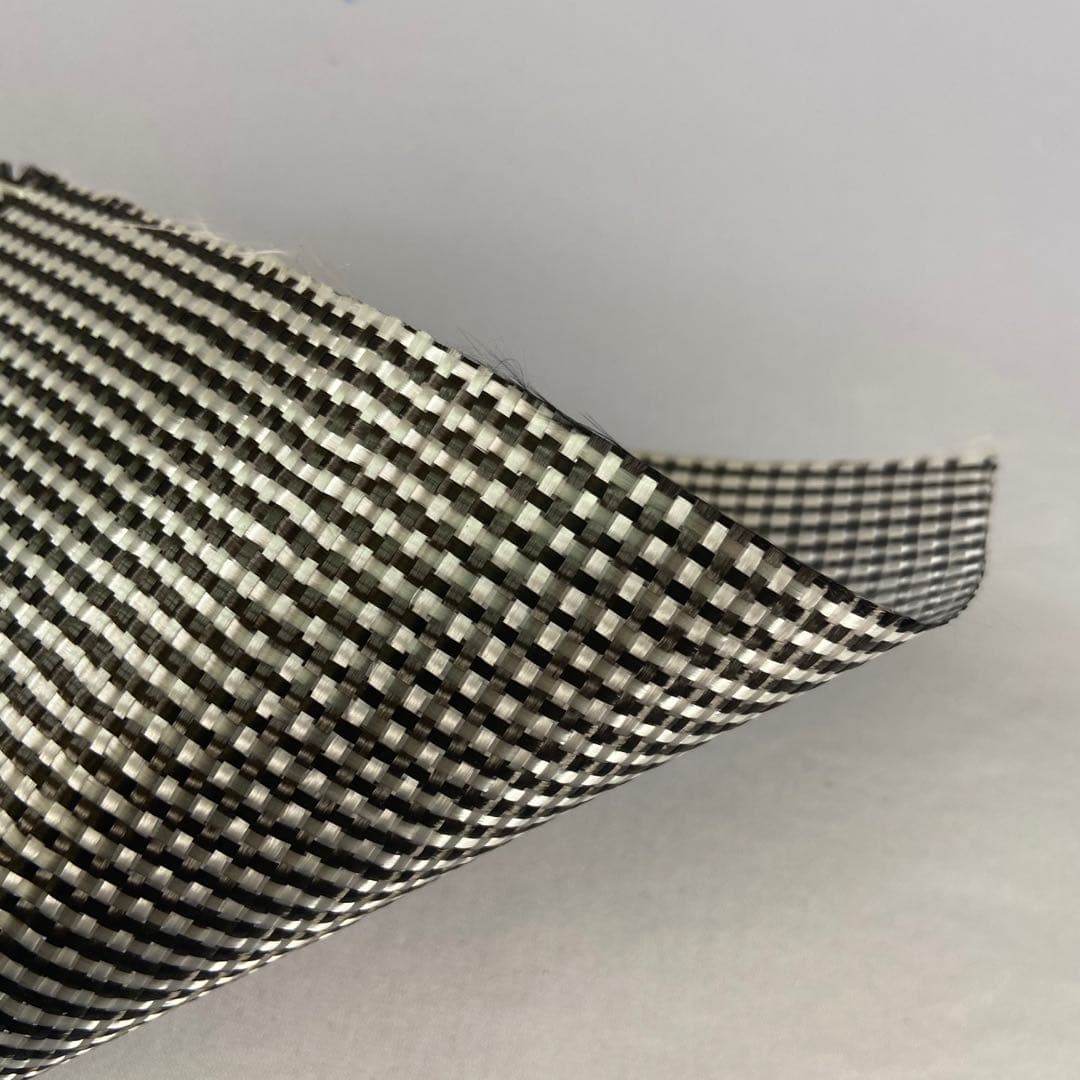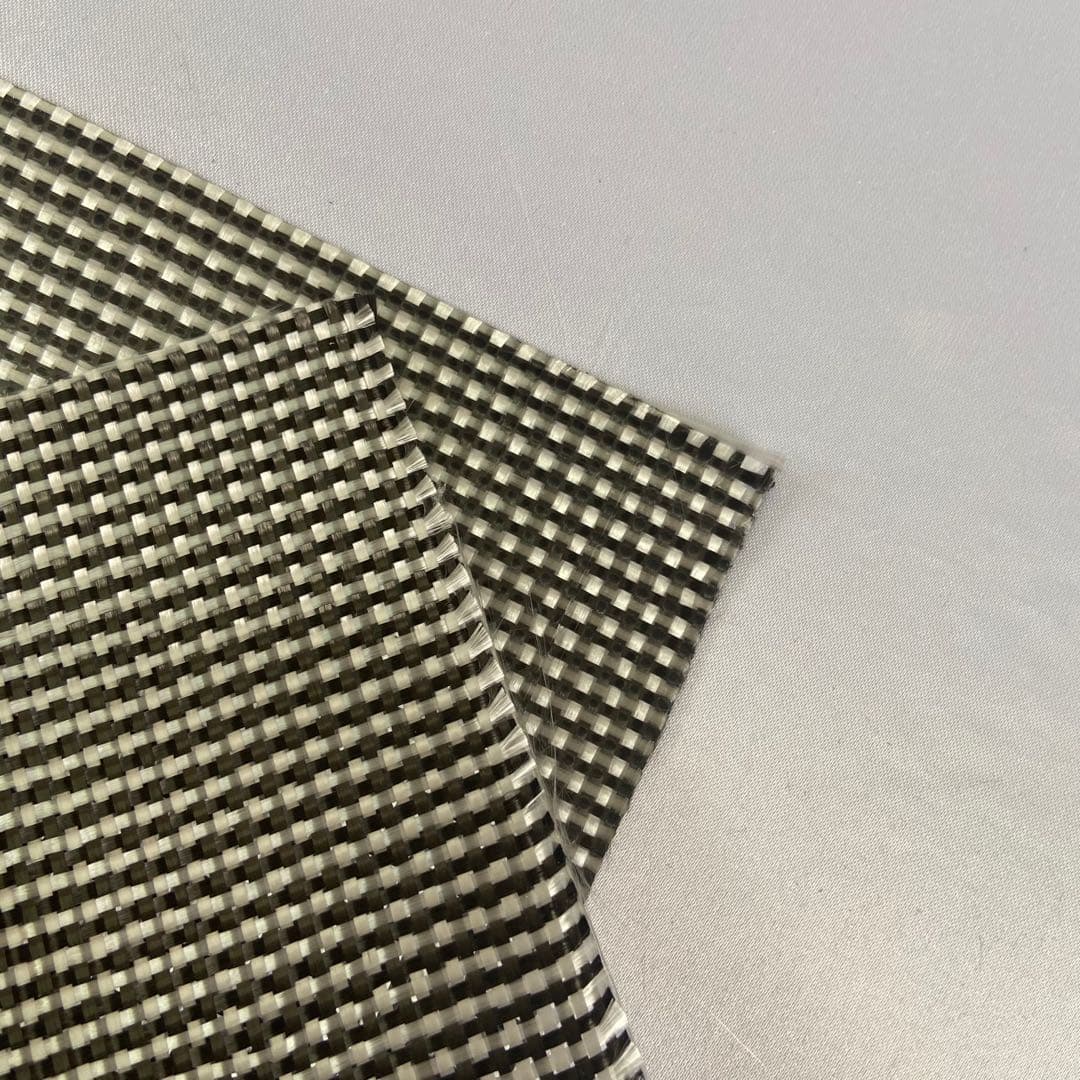
Carbon-Glass Hybrid Woven Cloth
200-240g/m² carbon-glass hybrid woven cloth combining high modulus with cost efficiency. Suitable for carbon fiber products and decorative applications.
Key Features
- Carbon-glass hybrid weave
- High modulus (T300)
- 200-240g/m² options
- Decorative finish available
Overview
The carbon-glass hybrid woven cloth interweaves carbon and glass fibers to achieve the high modulus of carbon at a more accessible cost, available in 200g/m² and 240g/m² weights. The carbon yarns provide stiffness and the distinctive dark aesthetic, while the glass yarns reduce material cost and add toughness, making the fabric attractive for both structural and decorative carbon fiber products.
Built around T300-grade carbon fiber, the cloth offers reliable mechanical performance for parts that need carbon's rigidity without the price of an all-carbon layup. The woven structure drapes over molds and conforms to moderate curvature, and the hybrid construction is popular in automotive trim and visible composite components where the carbon weave appearance is part of the design.
The fabric wets out with standard laminating resins and suits hand lay-up, vacuum bagging, and infusion. Its balance of modulus, cost, and finish makes it a versatile choice for manufacturers producing decorative panels and semi-structural carbon parts at volume.
Specifications
| Parameter | Value |
|---|---|
| Weight | 200g / 240g |
| Material | Carbon + Glass Fiber |
| Strength | T300 |
| Application | Carbon Fiber Products |
Applications
Frequently Asked Questions
What is the benefit of a carbon-glass hybrid cloth?
It delivers carbon fiber's high modulus and characteristic appearance at a lower cost than all-carbon fabric, with glass fibers adding toughness. It suits both semi-structural and decorative carbon fiber products.
What weights are available?
The hybrid woven cloth is offered in 200g/m² and 240g/m² weights, allowing selection based on the stiffness and thickness required for the part.
Is this fabric suitable for visible decorative parts?
Yes. The woven carbon yarns give a distinctive appearance that is often left visible in automotive trim and decorative composite components.